Why Balletcore Reads as Costume on Some People and Not Others
Quick Answer: Balletcore reads as costume when you combine more than two literal dancewear pieces at once, when everything is pale pink, and when the fabrics are all soft with nothing structured to anchor them. Keep one obvious ballet reference per outfit, ground it with a hard piece - a denim jacket, a leather bag, a proper shoe - and the whole thing reads as fashion rather than as dress-up.
The references are the appeal. Using all of them at once is the problem.
What actually tips an outfit into costume?
Three things, and they usually happen together.
Too many literal references at once. A wrap top, leg warmers, a tulle skirt, ribbon ties, and ballet flats is not a balletcore outfit - it is a ballet outfit. One clear reference per look is the rule, two at most if one is subtle.
The all-pink problem. Pale pink is the single most recognisable ballet signal, and head-to-toe pale pink with any dancewear silhouette reads instantly as costume. Pink used as one element among neutrals is completely different.
Everything soft, nothing structured. Balletcore fabrics are almost all soft - jersey, tulle, fine knit, satin. An outfit made entirely of them has no visual anchor, which is what makes it read as underwear or as stagewear rather than as clothes.
The pattern underneath all three: costume happens when nothing in the outfit belongs to ordinary life. Every successful balletcore look has at least one element that has nothing to do with ballet - and that element is what makes the rest read as a choice rather than as a uniform.
The good news is that this makes it very fixable. Usually one swap does it.
Which pieces are safe, and which are high-risk?
Ranked by how much attention each draws to the reference.
Low risk - wear freely:
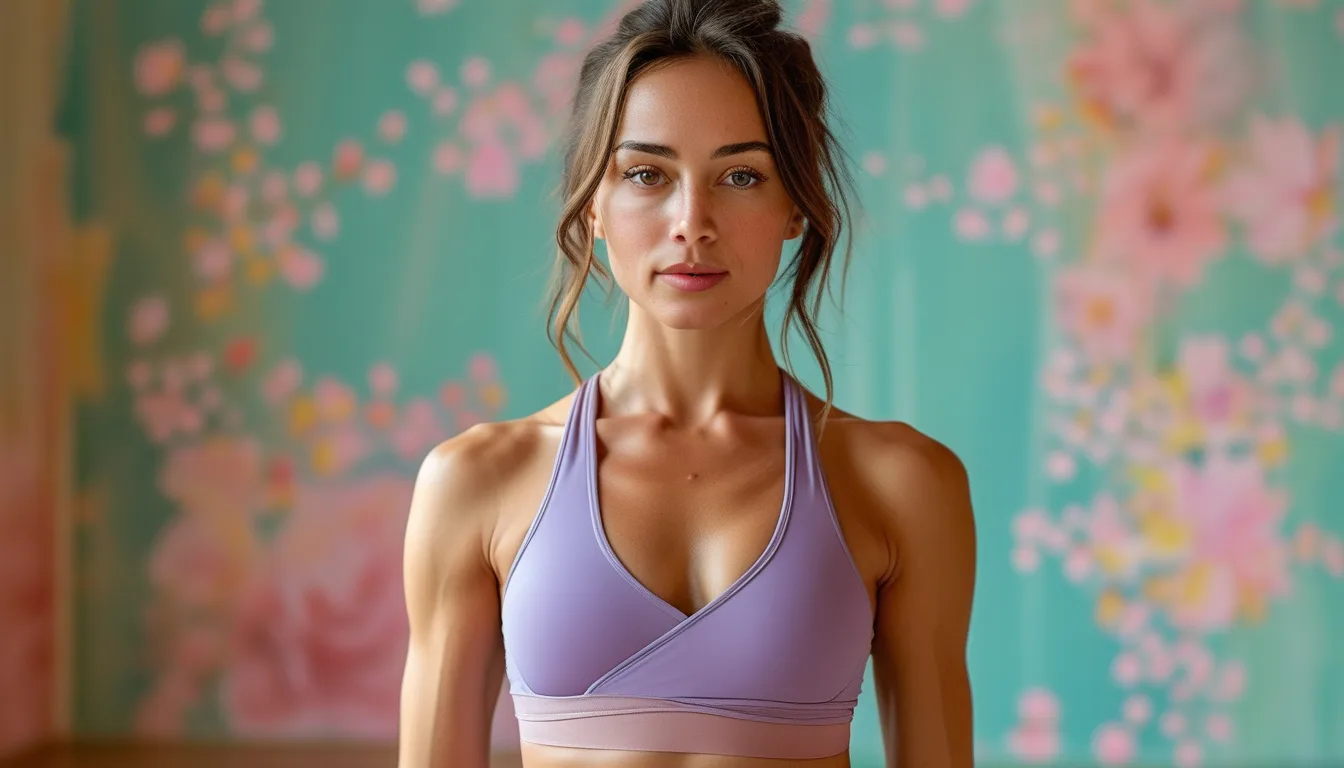
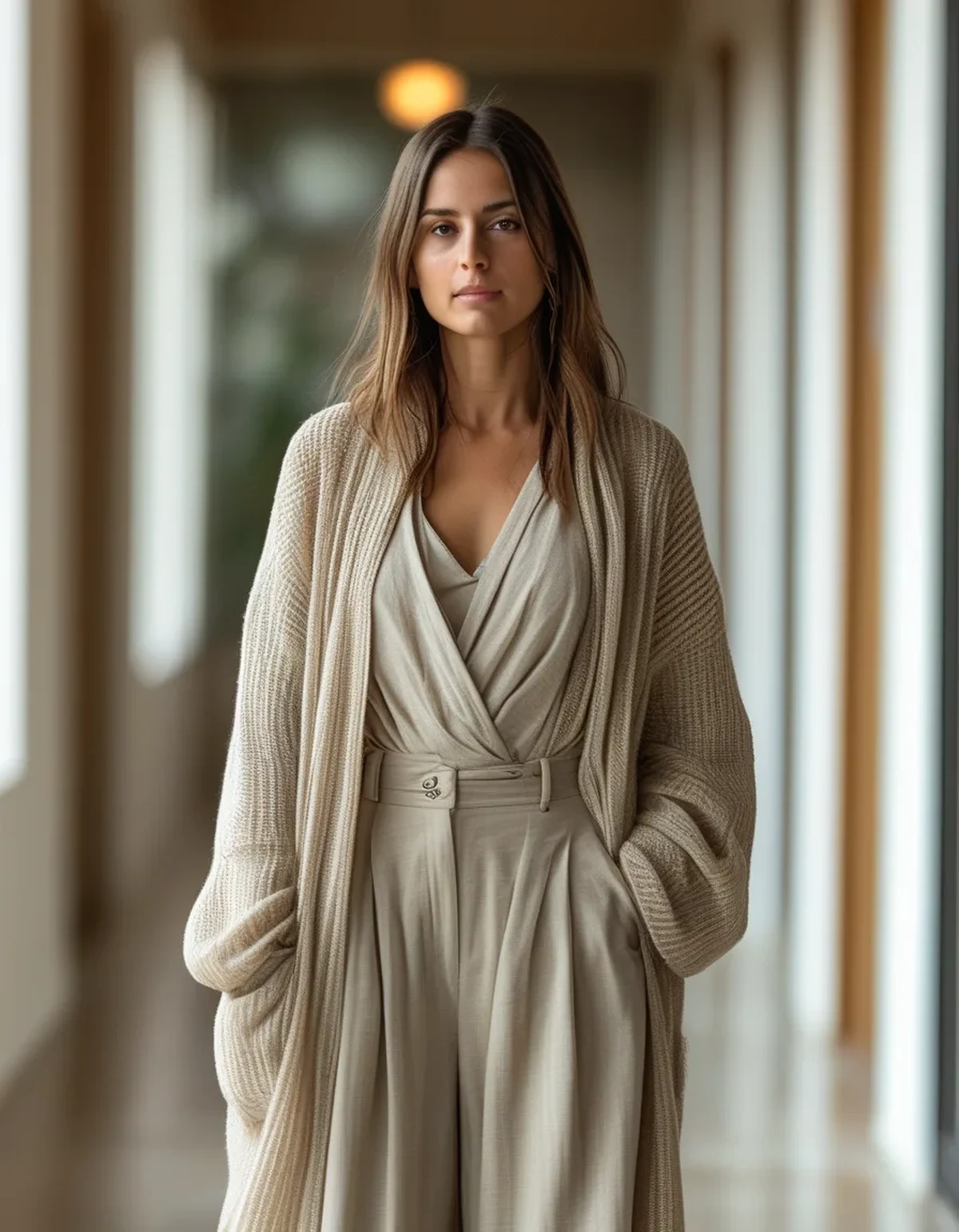
- Wrap cardigans and crossover tops. The most wearable balletcore piece by a distance. Reads as a nice cardigan to anyone not looking for the reference.
- Fine ribbed knits and bodysuits. Just clothes with a clean line.
- Ballet flats. Now firmly mainstream footwear rather than a costume signal.
- Satin hair ribbons and low buns. Subtle, and easy to remove if the outfit is tipping.
Medium risk - one at a time:
- Leg warmers. Genuinely stylish over a slim trouser or with boots, and unmistakably a reference. One per outfit and nothing else literal.
- Tulle skirts. Beautiful and heavy-handed. Ground them with something firmly non-ballet on top - a knitted jumper, a denim jacket, a leather boot.
- Wrap-tie tops with visible ribbons.
High risk - proceed carefully:
- Full leotards worn as tops. Very hard to make read as clothing without substantial structure elsewhere.
- Anything with a visible skirt over leggings in the classic practicewear configuration.
- Head-to-toe pale pink, in any combination.
A working test: count the pieces someone would identify as dancewear if asked. Two or more and it needs rebalancing.
What does grounding an outfit actually look like?
You add one element from a completely different world, and it recalibrates everything else.
The most reliable grounding pieces:
- A denim jacket or straight-leg jeans. The single most effective anchor. Denim is so far from ballet that it reads as deliberate contrast rather than as confusion.
- A leather bag with structure. A soft outfit and a soft bag together give the eye nothing firm. A structured leather bag fixes it instantly.
- A substantial shoe. A loafer, an ankle boot, or a chunky flat instead of a ballet flat. Shoes carry disproportionate weight in how an outfit reads.
- A tailored coat or blazer. Structure at the shoulders reframes everything below it.
- A men’s-style watch or chunky jewellery. Small, and surprisingly effective against a delicate outfit.
The mechanism: costume works by internal consistency. Everything agreeing on one reference is what makes a look read as a costume rather than as an outfit. Introducing one deliberate disagreement breaks the consistency, and the reference becomes a styling choice.
The classic example: a tulle skirt with a slouchy grey sweatshirt and trainers. Both elements individually are extreme in opposite directions, and together they read as fashion. The same skirt with a wrap top and ballet flats reads as a dress rehearsal.

Myth vs Fact: Balletcore
Myth: You need to be very slim for balletcore to work. Fact: The silhouettes - wrap tops, A-line skirts, defined waists - are broadly flattering. What creates the association is the styling density, not the body wearing it. Adjusting the number of references matters far more than anything else.
Myth: Balletcore means pink. Fact: Pink is one palette. Cream, oatmeal, dove grey, black, and dusty sage all read balletcore through silhouette alone, and they read as clothes far more easily. The palette is where most costume problems start.
Myth: It only works in spring. Fact: The core pieces - wrap cardigans, fine knits, leg warmers, ballet flats - work best in transitional weather. Late summer into autumn is arguably the natural season for it, since layering is what the aesthetic is built on.
Myth: Leg warmers are automatically costume. Fact: Leg warmers over slim trousers, tucked into ankle boots, with a plain jumper are a legitimate and current styling move. They only read as costume alongside other dancewear, which is true of nearly every piece here.
Myth: You should not wear balletcore if you have never danced. Fact: It is an aesthetic, not a credential. Nobody is checking, and the pieces are just well-cut clothes with a soft palette.
What are the three outfits that always work?
Formulas rather than shopping lists, and each has exactly one reference plus one anchor.
Formula 1: The wrap and the denim. Wrap cardigan in cream or dove grey, plain fitted top underneath, straight-leg jeans, loafers or ankle boots, structured bag. The reference is the wrap; the anchor is the denim. Works from late summer through winter and is close to foolproof.
Formula 2: The tulle and the sweatshirt. Tulle or full midi skirt, slouchy sweatshirt or oversized knit, chunky flats or trainers, minimal jewellery. The reference is the skirt; the anchor is the sweatshirt. The deliberate mismatch is the whole point.
Formula 3: The leg warmers and the tailoring. Slim trousers or a fitted knit skirt, leg warmers over the top, ankle boots, a fine knit, and a tailored coat or blazer. The reference is the leg warmers; the anchor is the tailoring.
The common structure: one soft reference, one hard anchor, and everything else neutral and ordinary.
For late summer into early autumn, formula one is the most useful - a wrap cardigan carries a cool morning, comes off in the afternoon, and looks intentional either way. Add a satin ribbon at the hair if you want a second, very quiet reference.
FAQ: Balletcore Styling Questions, Answered
Can I wear balletcore to work?
The wrap cardigan and fine knit versions, yes, in most workplaces. Tulle skirts and leg warmers are usually a weekend proposition unless your workplace is unusually relaxed about dress.
Are ballet flats bad for your feet?
Most have minimal support and a very thin sole, which can be uncomfortable for long walking days. Versions with a padded footbed and a small heel exist and are considerably better if you are on your feet.
How do I do balletcore in cold weather?
Layer it - the aesthetic is built for layering. Wrap cardigan over a fine knit, opaque tights under a skirt, leg warmers over trousers, ankle boots rather than flats. It arguably works better in autumn than in summer.
What colours work if I do not suit pink?
Cream, oatmeal, dove grey, dusty sage, soft camel, and black all read balletcore through silhouette. Black in particular reads more sophisticated and is the easiest colour to avoid the costume problem in.
How do I know if my outfit has tipped too far?
Count the pieces someone would recognise as dancewear. If it is more than one, remove one and add something structural instead - a jacket, a boot, or a leather bag.
TL;DR:
- Costume happens when everything in the outfit agrees on one reference
- Keep to one clear ballet piece per look, two only if one is very subtle
- Head-to-toe pale pink is the single fastest route to fancy-dress
- Anchor every look with one hard element: denim, leather, tailoring, or a substantial shoe
- Three reliable formulas: wrap and denim, tulle and sweatshirt, leg warmers and tailoring
The aesthetic works because soft, wrapped, and delicate is genuinely lovely against ordinary clothes. It stops working the moment there are no ordinary clothes left in the outfit. Keep one reference, add one anchor, and it reads as style every time.
Keep Reading
This article is for general informational and styling purposes only. Fit, sizing, and product availability may vary.