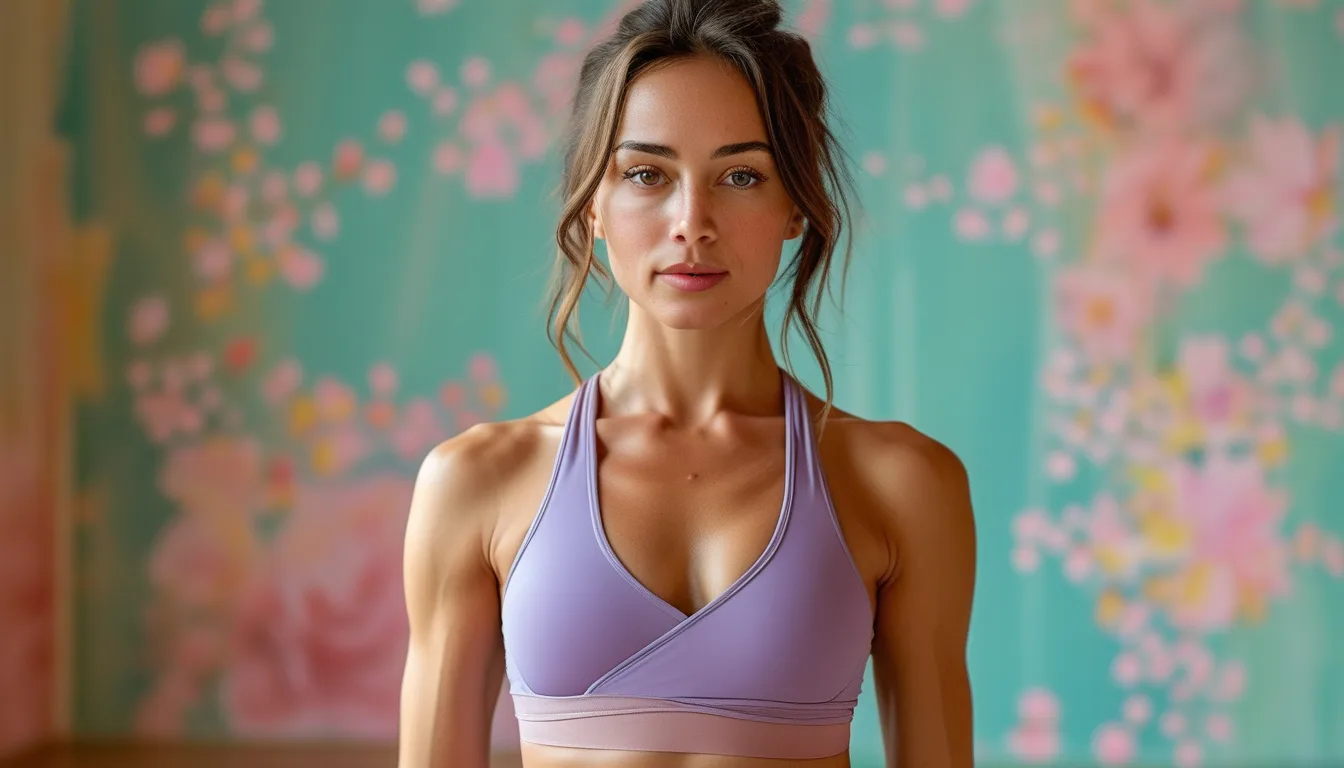
How to Wear Balletcore Without Looking Like You Are Going to Class
Quick Answer: Balletcore works when you take one reference at a time and pair it with something structured or unmistakably everyday. Wrap top with jeans, ballet flats with tailored trousers, a soft knit with a leather jacket. It tips into costume when three or more references stack - leotard, wrap skirt, leg warmers, and flats together read as dancewear, not as a trend.
The pieces are genuinely appealing and genuinely easy to get wrong, because every element is a recognisable signal. Wear two and you are referencing something. Wear four and you look like you are on your way somewhere specific.
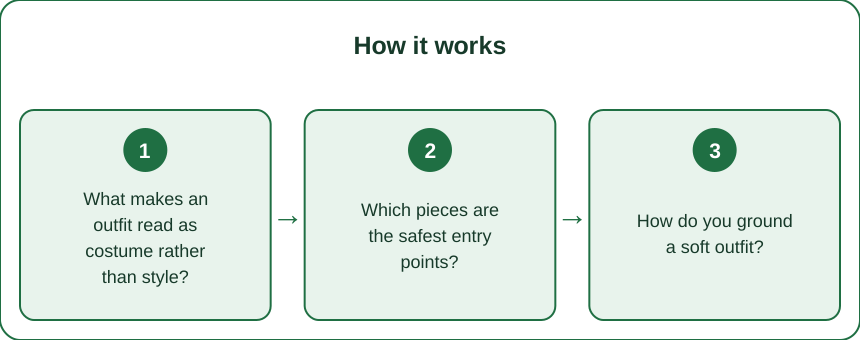
What makes an outfit read as costume rather than style?
Reference density. It is that simple, and it is the whole rule.
Each balletcore element carries a strong, specific association: wrap tops, ribbon ties, leg warmers, flats with ankle straps, soft pink, tulle, and leotard necklines. Individually each reads as a soft, feminine choice. Collectively they read as a costume, because you have supplied every signal a viewer needs to identify a complete look.
The working rule: one or two references, maximum. Then anchor them with pieces that carry no reference at all.
Examples of the ratio working:
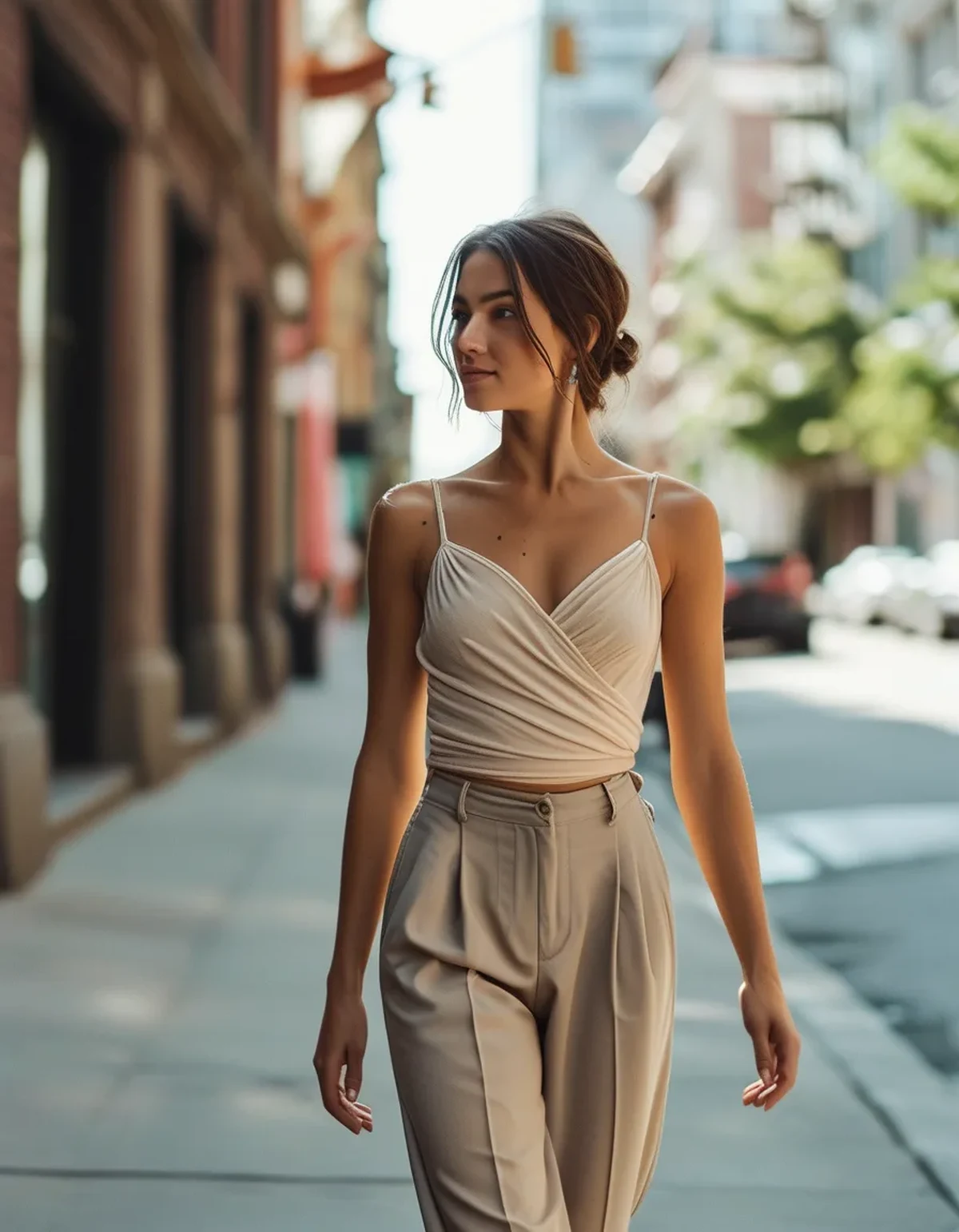
- Wrap top + straight jeans + loafers - one reference, two neutral pieces
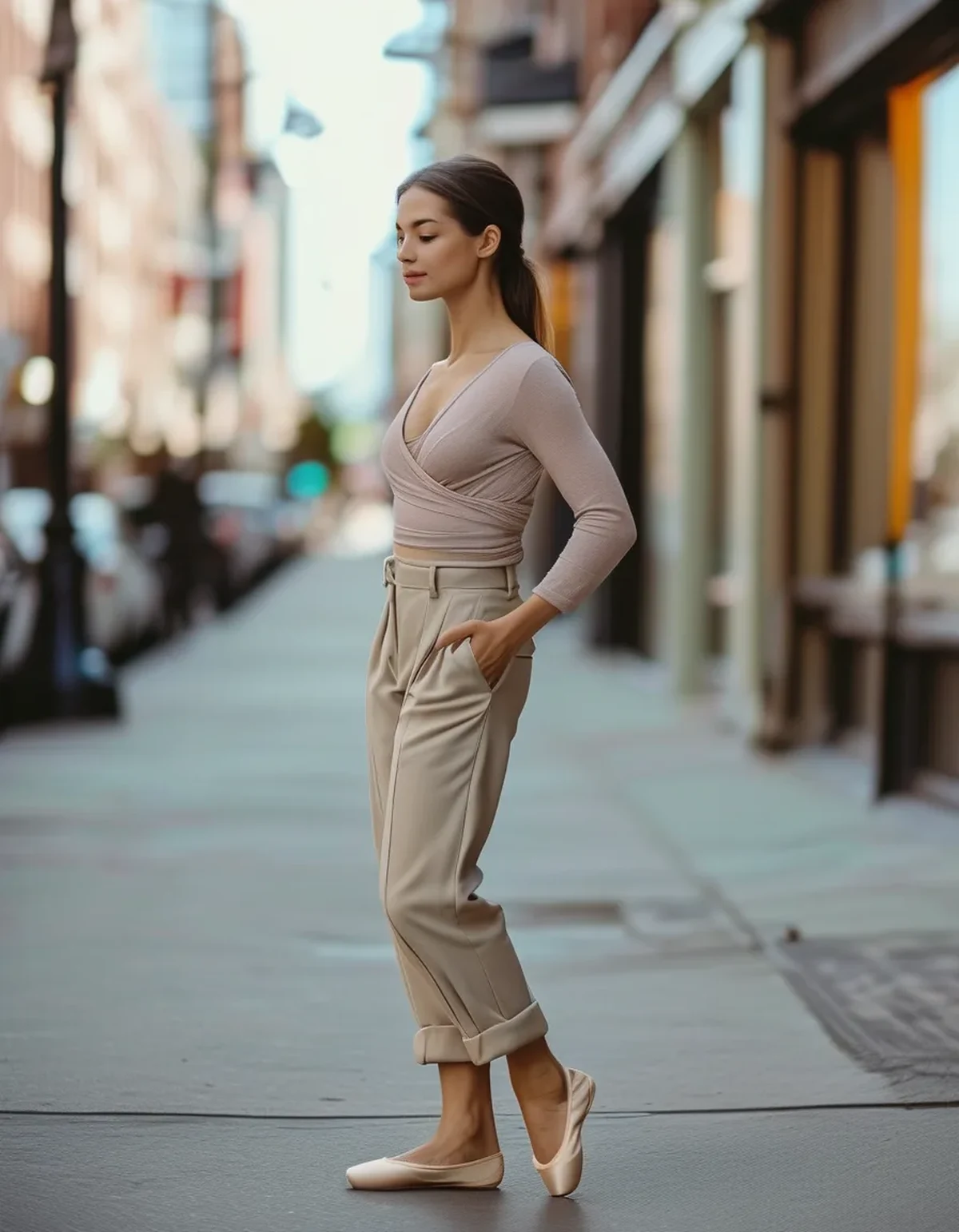
- Ballet flats + tailored trousers + a plain knit - one reference, thoroughly grounded
- A soft pink knit + leather jacket + straight trousers - one reference, and the leather actively contradicts it
Examples of the ratio failing:
- Wrap top + wrap skirt + flats with ribbons - three references
- Leotard-style bodysuit + leg warmers + soft pink + bun - four, and firmly in costume territory
The contradiction principle is the more advanced version: pairing a soft reference with something with an opposite character - leather, denim, tailoring, a chunky boot - grounds it more effectively than a neutral piece does.
Which pieces are the safest entry points?
Some elements are far more wearable in daily life than others, and it is worth knowing which is which.
Safest, essentially everyday pieces:
- Ballet flats. Now firmly a mainstream shoe. With jeans or tailored trousers they read as a shoe choice rather than a reference.
- Wrap tops and ballet-neck knits. A wide neckline and a wrap front are ordinary garment shapes.
- Soft neutral knitwear. Cream, oatmeal, pale grey - these are just good knitwear.
- A simple bun. A hairstyle, not a costume, unless everything else is also referencing.
Medium risk, works with grounding:
- Leg warmers over jeans or trousers, in a neutral colour rather than pink
- Wrap skirts with a plain top and boots
- Ribbon or lace-up details in small doses, on one item only
- Soft pink, which is fine as a colour and becomes a signal when combined with balletcore shapes
Highest risk, hardest to ground:
- Leotard-style bodysuits with a scoop or camisole neckline
- Tulle skirts, which have very little everyday application
- Ballet flats with ribbon ankle ties, which are the most literal version of the shoe
- Full head-to-toe pale pink
Starting with two or three items from the first group gives you the aesthetic with essentially no risk.
How do you ground a soft outfit?
By adding something with weight, structure, or a completely different attitude.
Four grounding tools, roughly in order of strength:
1. Leather. A leather jacket over anything soft immediately shifts the reading. It is the most reliable single item for this purpose, and a well-worn one works better than a pristine one.
2. Denim. Straight or wide-leg jeans anchor a soft top instantly. Denim carries no delicacy at all, which is exactly what makes it useful here.
3. Structured tailoring. A blazer with a real shoulder, or a proper trouser with a crease. Structure contradicts softness without adding toughness, which suits some contexts better than leather does.
4. A heavier shoe. A loafer, a chunky boot, or a clean trainer instead of flats. Footwear is often the single fastest fix when an outfit feels too delicate.
Colour grounding also works. Adding one genuinely dark piece - navy, charcoal, black - breaks a pale palette and stops it reading as a single soft mood. A pale pink outfit with a black bag is a different outfit from the same one with a cream bag.
A useful check: if you removed every soft element, would what remains be an outfit you would wear? If yes, the soft elements are decorating a real outfit. If no, they are the outfit, which is where the costume risk lives.
Myth vs Fact: Balletcore
Myth: You need to be slim or dancer-shaped to wear it. Fact: The aesthetic is about fabric, colour, and shape references, none of which are body-specific. Wrap tops in particular suit a wide range of shapes because the depth of the wrap is adjustable, which is more than most necklines offer.
Myth: It has to be pink. Fact: Cream, oatmeal, soft grey, black, and burgundy all work and are considerably easier to wear. Pink is the most photographed version, not the defining one, and black balletcore is often the most wearable version there is.
Myth: Ballet flats are bad for your feet. Fact: Very thin, unsupportive flats worn for long walking days can cause problems for some people, which is a fair argument for choosing versions with some cushioning and a slight structure. As an occasional or short-distance shoe they are fine for most people. If you have existing foot issues, this is worth a word with a podiatrist.
Myth: It is a summer-only look. Fact: It transitions well into autumn - soft knitwear, tights with flats, leg warmers over trousers, and a wool wrap coat all carry the reference into colder weather without any change in approach.
Myth: Wearing real dancewear is the authentic version. Fact: Actual dancewear is designed for movement in a studio, and worn on the street it reads exactly as what it is. The trend is a reference to it, and the distance between the two is the point.
How does it work for early autumn?
Better than for summer, honestly, because the layering gives you more grounding opportunities.
Autumn balletcore pieces that work:
- Fine merino wrap cardigans in cream or grey, over a plain vest and jeans
- Ballet flats with sheer or opaque tights, which extends flats into cooler weather
- Leg warmers over straight-leg trousers, in charcoal or oatmeal rather than pink
- A soft knit midi skirt with a chunky boot - the contrast does the grounding
- A wrap coat with a tie belt, which is a balletcore silhouette in outerwear form
Autumn colours that keep the reference without the pink: oatmeal, bone, camel, dove grey, and burgundy. Burgundy in particular reads as autumnal and still fits the aesthetic’s softness.
The layering advantage: in summer, a wrap top and flats is essentially the whole outfit, so the reference density is high by default. In autumn you add a jacket, a trouser, and a boot, and each of those is an opportunity to ground the look. The same soft top is much easier to wear in October than in July.
One practical note: ballet flats and wet pavements are a poor combination. A loafer keeps most of the shape reference with far better weather tolerance, which makes it the more sensible autumn choice.
FAQ: Balletcore Styling Questions, Answered
How many balletcore pieces can I wear at once?
One or two references, grounded by everything else. Three starts to read as a themed outfit, and four is a costume. This ratio matters more than which specific pieces you choose.
Can I wear balletcore to the office?
Selectively. A wrap knit with tailored trousers and loafers is entirely office-appropriate. A tulle skirt or a leotard-style top is not, in most workplaces. Choose from the low-risk list and it works easily.
Is balletcore still current?
The softer end of it has largely absorbed into ordinary wardrobes - ballet flats, wrap tops, and soft knitwear are simply available now. The more literal versions come and go, which is another argument for the low-density approach.
What shoes work other than ballet flats?
Loafers, mary janes, a clean low trainer, or an ankle boot. All keep the outfit intact and some of them ground it better than flats do.
How do I wear it if pink does not suit me?
Skip pink entirely. The aesthetic is defined by shape and fabric - wrap fronts, soft knits, wide necklines - far more than by colour. Black, cream, and grey versions are often more wearable anyway.
TL;DR:
- Reference density is the whole rule: one or two balletcore elements, everything else neutral or contradictory
- Ballet flats, wrap tops, and soft knitwear are essentially everyday pieces; tulle and leotards are not
- Ground softness with leather, denim, tailoring, or a heavier shoe - footwear is the fastest fix
- Skip pink if you want easier wearability; cream, grey, black, and burgundy all work
- Autumn suits it better than summer, because layering gives you more grounding opportunities
The test is simple: strip out the soft pieces and see whether a real outfit remains. If it does, you are wearing a trend. If it does not, you are wearing a costume, and the fix is usually one substitution away.
Keep Reading
This article is for general informational and styling purposes only. Fit, sizing, and product availability may vary.