Balletcore Shoes Beyond the Flat: 6 Options That Still Read Ballet
Quick Answer: Balletcore reads through specific visual cues - a rounded or almond toe, ankle straps or ribbon detail, soft neutral colours, and a low profile - not through the ballet flat specifically. Mary janes, mesh flats, low block-heel pumps, ribbon-laced trainers, sock boots, and soft loafers all carry those cues while being more practical than a thin-soled flat, which matters from October onward.
The flat is the obvious answer and the least wearable one. Here are six that keep the aesthetic and survive a wet pavement.
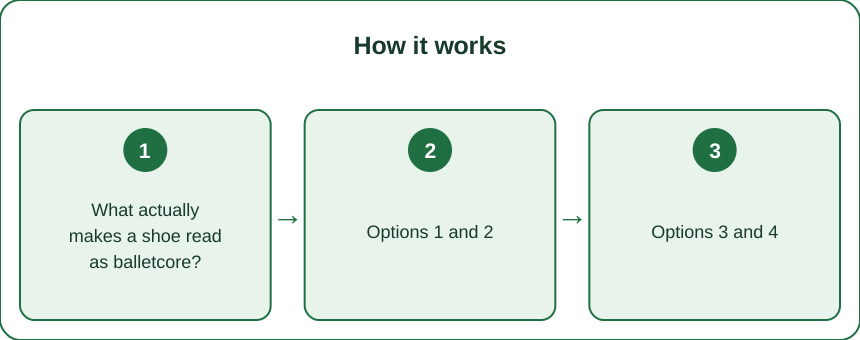
What actually makes a shoe read as balletcore?
Four visual cues, and a shoe needs two of them to read correctly.
1. Toe shape. Rounded or soft almond. A sharp point reads as a different aesthetic entirely, and a square toe reads as contemporary rather than ballet.
2. Ankle detail. A strap, a ribbon, an elasticated band. This is the strongest single cue, because it echoes a ballet shoe’s ties directly.
3. Colour. Soft neutrals - pink, cream, blush, bone, buttery tan - plus black. These are the pointe shoe and rehearsal palette.
4. Low profile at the toe. The shoe sits close to the foot rather than standing away from it. Chunky soles are the main thing that breaks the effect.
What you don’t need: a paper-thin sole, no support, and no protection from the weather. Those are properties of the actual ballet flat and are not what makes it read as balletcore.
The freeing implication: a mary jane with a small block heel and a cushioned sole carries three of the four cues and is wearable for an entire day in October. The aesthetic doesn’t require the discomfort.
Options 1 and 2: Mary janes and mesh flats
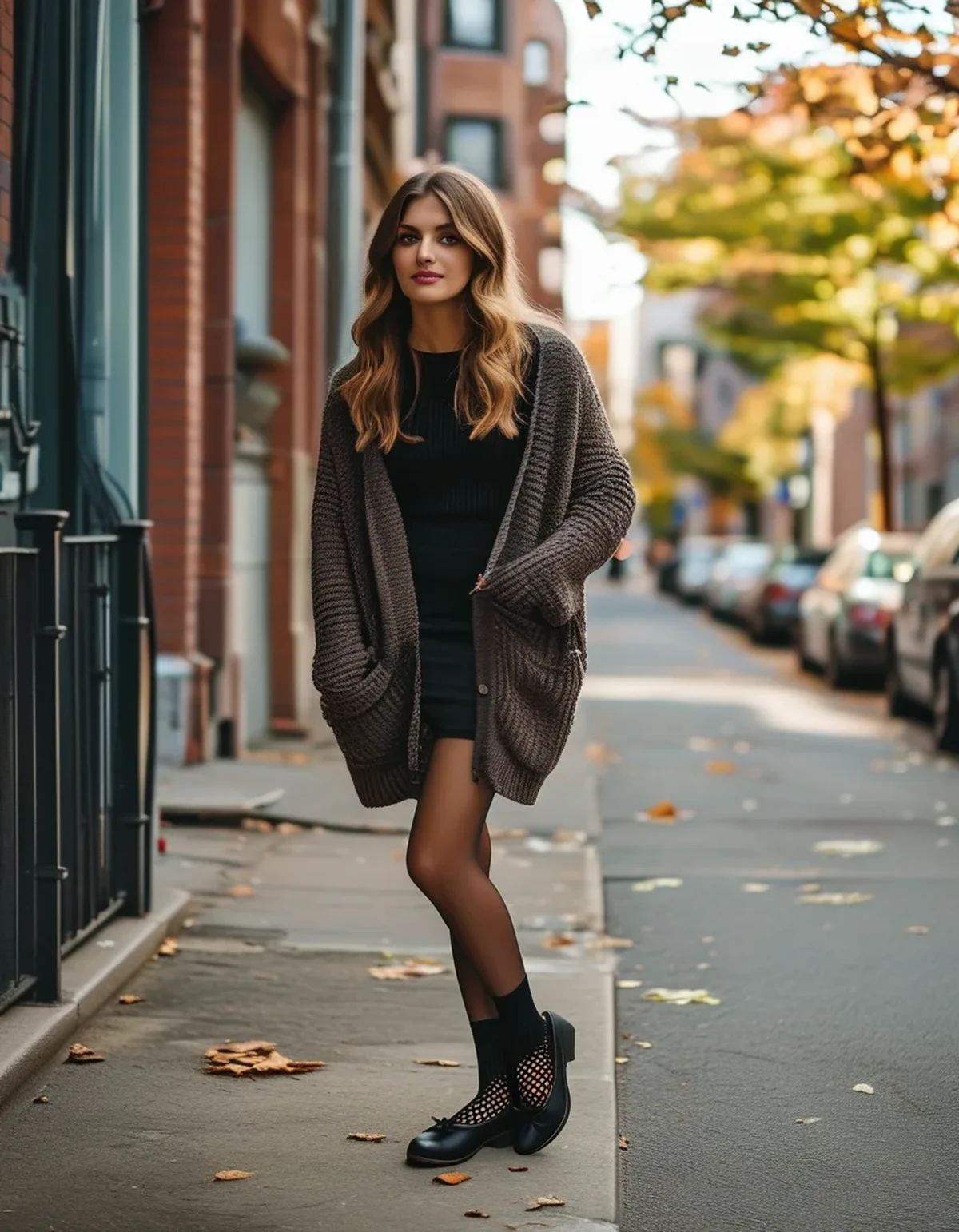
1. The mary jane. The single best balletcore shoe for practical wear, and arguably more on-aesthetic than a plain flat because the strap is a direct visual reference.
- Flat or low block heel both work; a 3-4cm block heel adds shape without changing the register
- A double strap reads slightly more directional; single strap reads classic
- In black patent it goes with almost everything; in cream or blush it’s more explicitly balletcore
- Pair with: ribbed socks, sheer or opaque tights, or bare with a midi skirt
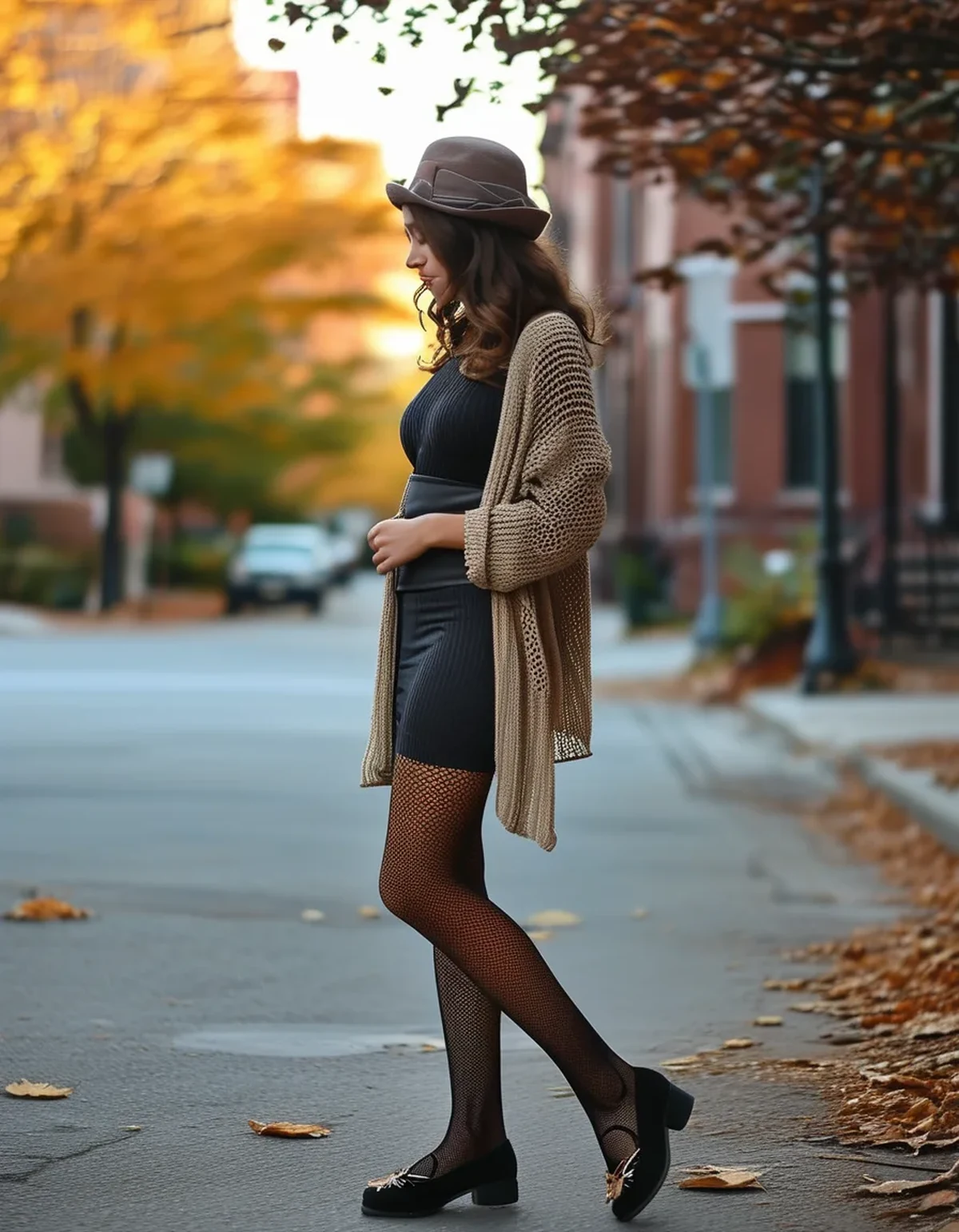
2. The mesh flat. The most fashion-forward option and one of the most recognisable in recent seasons.
- Sheer mesh upper with a leather or synthetic toe cap and heel counter
- The mesh reads as a ballet shoe’s soft upper while giving the shoe more structure
- Autumn caveat: mesh is not waterproof and not warm. It works in dry autumn weather with tights or socks underneath, and doesn’t work in November rain
- Pair with: a contrasting sock, which is part of the look rather than a compromise
Both of these: look for a cushioned insole. The aesthetic doesn’t require a flat piece of leather between you and the pavement, and the difference across a day is enormous.
Options 3 and 4: Low block heels and ribbon trainers
3. The low block-heel pump. The most grown-up version, and the one that works in an office.
- Rounded toe, block heel of 3-5cm, soft neutral or black
- An ankle strap makes it unambiguously balletcore; without one it’s simply a pump
- Stable enough for a full day and for uneven pavements, unlike a thin flat or a stiletto
- Pair with: tailored trousers, a knit midi, or a full skirt with tights
4. The ribbon-laced trainer. The most practical option on this list and a genuinely modern take.
- A low-profile leather or mesh trainer with satin ribbon laces instead of standard ones
- You can convert shoes you already own - satin ribbon costs very little and threads through most eyelets. Tie in a small bow at the front rather than wrapping the ankle, which reads as costume
- Keep the trainer minimal and white, cream, or black; a running shoe with visible tech detailing won’t work regardless of the laces
- Pair with: leg warmers or slouchy socks, a wrap cardigan, and a full skirt or wide-leg trouser
A note on proportion: with any low, delicate shoe, the volume needs to be managed above. A voluminous skirt with a delicate shoe works because the contrast is deliberate; volume everywhere flattens the effect.
Options 5 and 6: Sock boots and soft loafers
5. The sock boot. The best cold-weather option that still reads balletcore.
- A close-fitting ankle boot in a stretch knit or fine suede, rounded toe, low heel
- The close fit is what carries the reference - it follows the foot and ankle the way a ballet shoe does, rather than standing away from it
- In cream, taupe, or black. Avoid heavy hardware, chunky soles, and pointed toes
- Pair with: anything you’d wear a flat with, plus tights, and it takes the whole aesthetic into winter
6. The soft loafer. The most understated and the easiest to wear.
- Unstructured leather, rounded toe, minimal or no hardware, low profile
- The balletcore cue here is the softness and the shape, not any explicit ballet reference. It works because it shares the same visual register: quiet, low, neutral
- Add a bow-detail or a ribbon lace version if you want the reference to be explicit
- Pair with: ribbed socks - the sock is doing a lot of the work in this pairing
Autumn layering note for all six: socks are the accessory that connects any of these shoes to the aesthetic. Ribbed cotton, fine wool, or a sheer nylon in cream, black, or a soft neutral. A visible sock is deliberate; a barely-showing one isn’t.
Myth vs Fact: Balletcore Footwear
Myth: You need actual ballet flats. Fact: The aesthetic runs on toe shape, ankle detail, colour, and profile. Several shoes carry those cues better than a plain flat does, and all of them are more wearable.
Myth: Ribbons should wrap around the ankle. Fact: Full ankle-wrapping reads as costume in most contexts. A small bow at the vamp or a single strap communicates the same thing with far more subtlety.
Myth: Balletcore is a summer aesthetic. Fact: Its core references - wrap cardigans, leg warmers, tights, soft knits - are cold-weather rehearsal wear. Autumn and winter are arguably its natural season; only the flat shoe is a summer item.
Myth: It has to be pink. Fact: Cream, bone, black, grey, and soft brown are all within the palette. The rehearsal room is mostly neutral, not pink - and neutral versions are considerably easier to wear.
Myth: Ballet flats are comfortable because dancers wear them. Fact: Fashion ballet flats and ballet shoes have almost nothing in common structurally. A thin-soled flat with no support is one of the least comfortable shoes for walking distances, and it’s the most common regret purchase in this category.
FAQ: Balletcore Shoe Questions, Answered
Can I wear balletcore shoes with trousers?
Yes - wide-leg and tailored trousers work particularly well, especially with a mary jane or a low block heel. The proportion is cleaner than with a skinny trouser.
How do I stop flats from slipping off?
Heel grips, a strap style, or sizing down half a size. Persistent slipping usually means the shoe is too wide rather than too long.
Are ballet flats bad for your feet?
Unsupportive flat shoes worn for long distances can contribute to foot and arch discomfort for some people. If you’re on your feet a lot, choose a version with a cushioned insole or add an insert, and don’t make it your daily walking shoe.
What socks work best?
Ribbed cotton or fine wool in cream, black, or grey. Sheer socks are the most fashion-forward version. The key is that the sock is visible and deliberate rather than accidentally peeking.
TL;DR:
- Balletcore reads through toe shape, ankle detail, soft neutrals, and a low profile - not the flat itself
- Mary janes are the most practical and arguably most on-aesthetic option
- Ribbon-laced trainers and sock boots take the look into autumn and winter
- Keep ribbons as a small bow, not wrapped around the ankle
- The sock is part of the outfit - visible and deliberate, in cream, black, or grey
The thin-soled flat is the one item in this aesthetic that doesn’t survive a real autumn. Everything else about balletcore was designed for a cold rehearsal room.
See It in Motion
Seen here: High Waist Drawstring Wide Leg Yoga Pants with Pockets — shop it on bubblelime.com
Keep Reading
This article is for general informational and styling purposes only. Fit, sizing, and product availability may vary.