How to Style Ballet Flats Without Looking Like You're in Costume
Quick Answer: Ballet flats read as chic rather than costume-y when paired with structured or contrasting pieces — like a blazer, straight-leg trousers, or a leather jacket — rather than being combined with other overtly balletcore elements like leg warmers or wrap tops in the same outfit.
Ballet flats themselves aren’t the risk. The risk is pairing them with too many other balletcore signifiers at once, which tips a look from ‘chic everyday shoe choice’ into ‘dance-class costume’ territory.

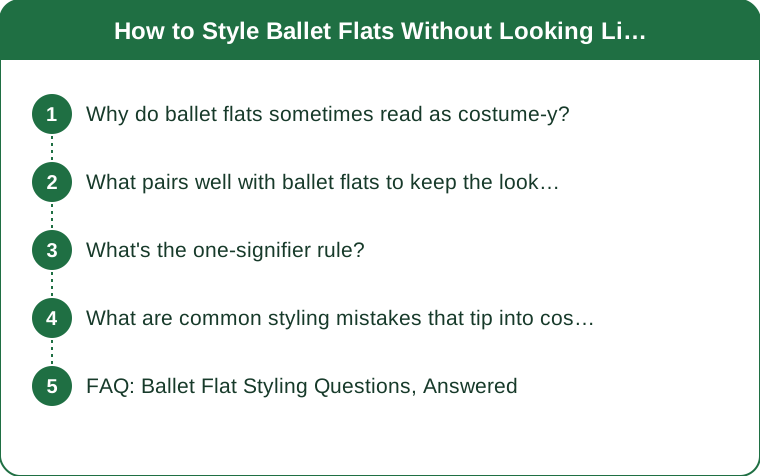
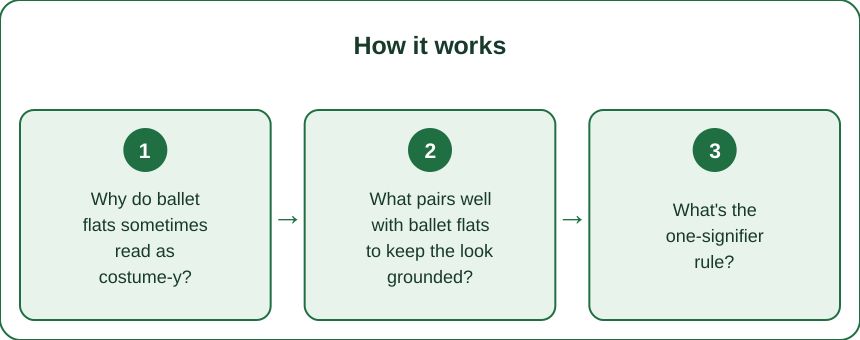
Why do ballet flats sometimes read as costume-y?
Because stacking multiple balletcore elements together — flats plus leg warmers plus a wrap top plus a tulle skirt, for example — pushes a look from subtle reference into full theme-dressing territory.
One balletcore element in an otherwise normal outfit reads as an intentional style choice. Three or four stacked together reads as costume, regardless of how well each individual piece is made.
What pairs well with ballet flats to keep the look grounded?
Structured, non-balletcore pieces — a tailored blazer, straight-leg or wide-leg trousers, a leather jacket, or a simple button-down — provide contrast that keeps the flats reading as a shoe choice rather than a costume signal.
The contrast is doing the work: soft, delicate flats next to something structured and unrelated to dance aesthetics balances the overall look.
What’s the one-signifier rule?
Limit yourself to one clearly balletcore element per outfit — the flats, or the wrap top, or the leg warmers, but generally not all three together for daily wear.
Save the fully layered balletcore look (multiple elements at once) for occasions where a more thematic, statement outfit is actually the goal, rather than everyday wear.
What are common styling mistakes that tip into costume territory?
Pairing flats with a tutu-adjacent skirt for daily wear, wearing leg warmers with visible ballet flats in a non-dance context, and head-to-toe pink or pastel alongside the flats all compound the balletcore signal past the point of looking intentional.
A single unexpected pairing — flats with structured tailoring, for instance — reads more confidently styled than several soft, matching balletcore pieces stacked together.
FAQ: Ballet Flat Styling Questions, Answered
Are ballet flats appropriate for a professional office setting?
Generally yes, especially paired with tailored pieces like trousers or a blazer — the flat itself reads as a legitimate professional shoe choice when the rest of the outfit is structured.
Can leg warmers ever work outside of dance class?
Yes, but sparingly and usually alone as the single balletcore element, paired with otherwise non-balletcore pieces like jeans and a plain top.
What color ballet flats are easiest to style without looking costume-y?
Neutral tones — black, nude, or a soft grey — integrate most easily into non-balletcore outfits; bright pink or pastel flats are more likely to read as thematic and benefit from more careful pairing.
TL;DR:
- Ballet flats themselves aren’t the risk — stacking multiple balletcore elements together is
- Pair with structured, contrasting pieces (blazer, trousers, leather jacket) to stay grounded
- Limit to one clear balletcore signifier per outfit for daily wear
- Neutral flat colors integrate more easily than bright pink or pastel into non-themed outfits
The difference between chic and costume isn’t the shoe — it’s how many other balletcore signals are stacked alongside it.
Keep Reading
This article is for general informational and styling purposes only. Fit, sizing, and product availability may vary.