Balletcore in the In-Between: What to Wear When It Is Too Warm for Knits
Quick Answer: Balletcore reads as a cool-weather aesthetic because its signature pieces - leg warmers, wrap knits, tights, layered cardigans - are all warm. The transition version keeps the silhouette and the palette while swapping the materials: fine-gauge knits for chunky, a bodysuit for a wrap top, bare legs with flats instead of tights, and a single soft layer carried rather than worn.
The aesthetic you’ve been building all year suddenly doesn’t work at 29C. Every reference image involves a knit wrap and leg warmers. Here’s what actually survives the transition, and what to put away until October.
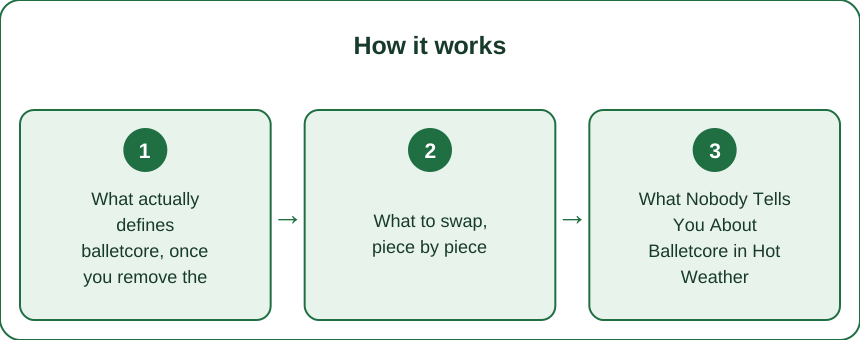
What actually defines balletcore, once you remove the warm pieces?
This is worth being precise about, because the answer determines what can be substituted.
Balletcore is defined by silhouette, palette, and detail - not by fabric weight.
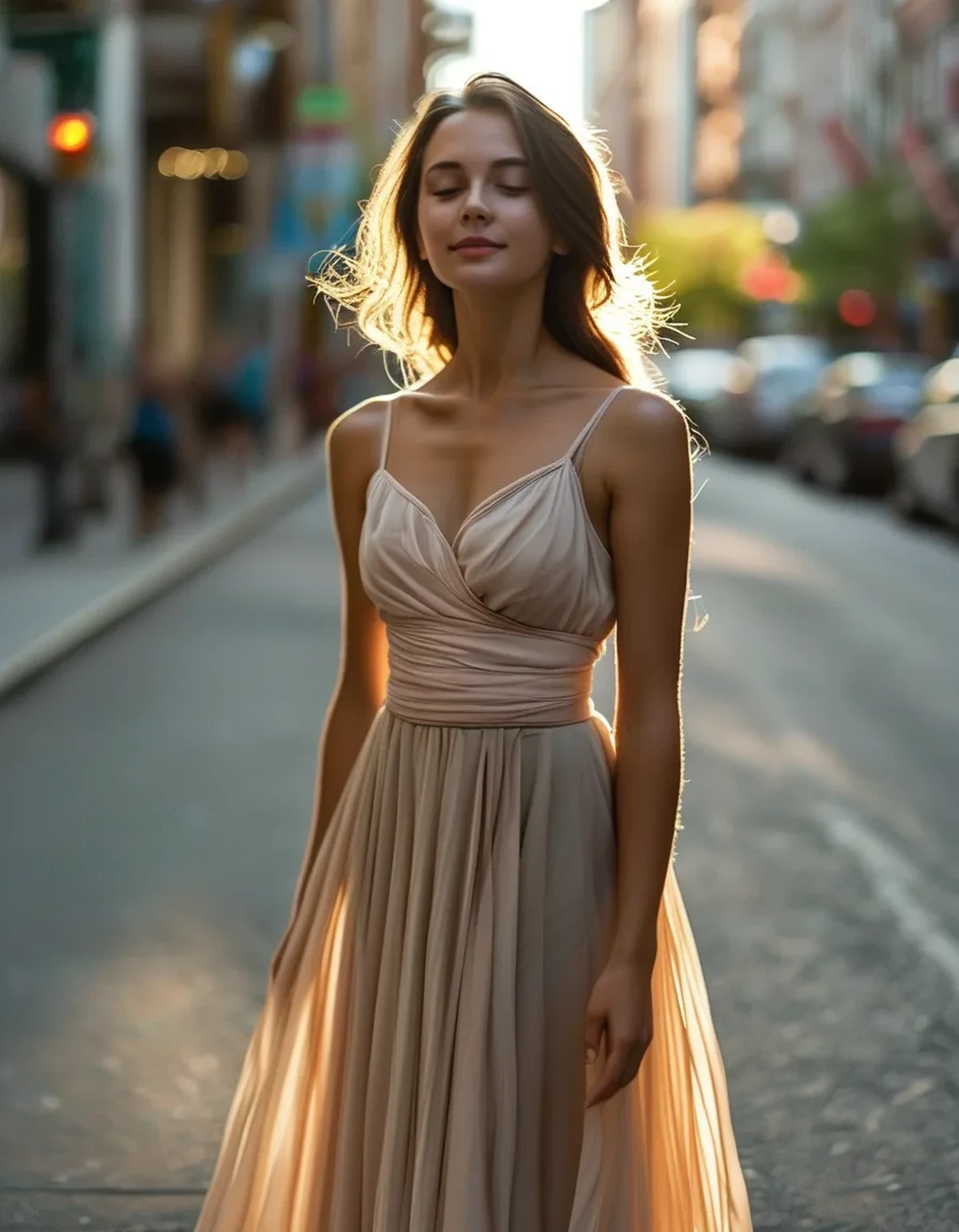
Silhouette: a fitted top with volume below, or an all-over softness with a defined waist. High necklines or wrap necklines. Long clean lines through the leg.
Palette: soft neutrals, cream, blush, dove grey, pale pink, black. Low contrast within an outfit.
Details: wrap fronts, ribbon ties, ruching, satin finishes, delicate straps, flat shoes with a strap or ribbon.
Notice that none of these require a warm fabric. Leg warmers and chunky knits are the most photographed elements, but they’re seasonal expressions of the aesthetic rather than the aesthetic itself.
Once you separate the two, the transition version becomes straightforward: keep silhouette, palette, and detail; substitute every fabric.
What to swap, piece by piece
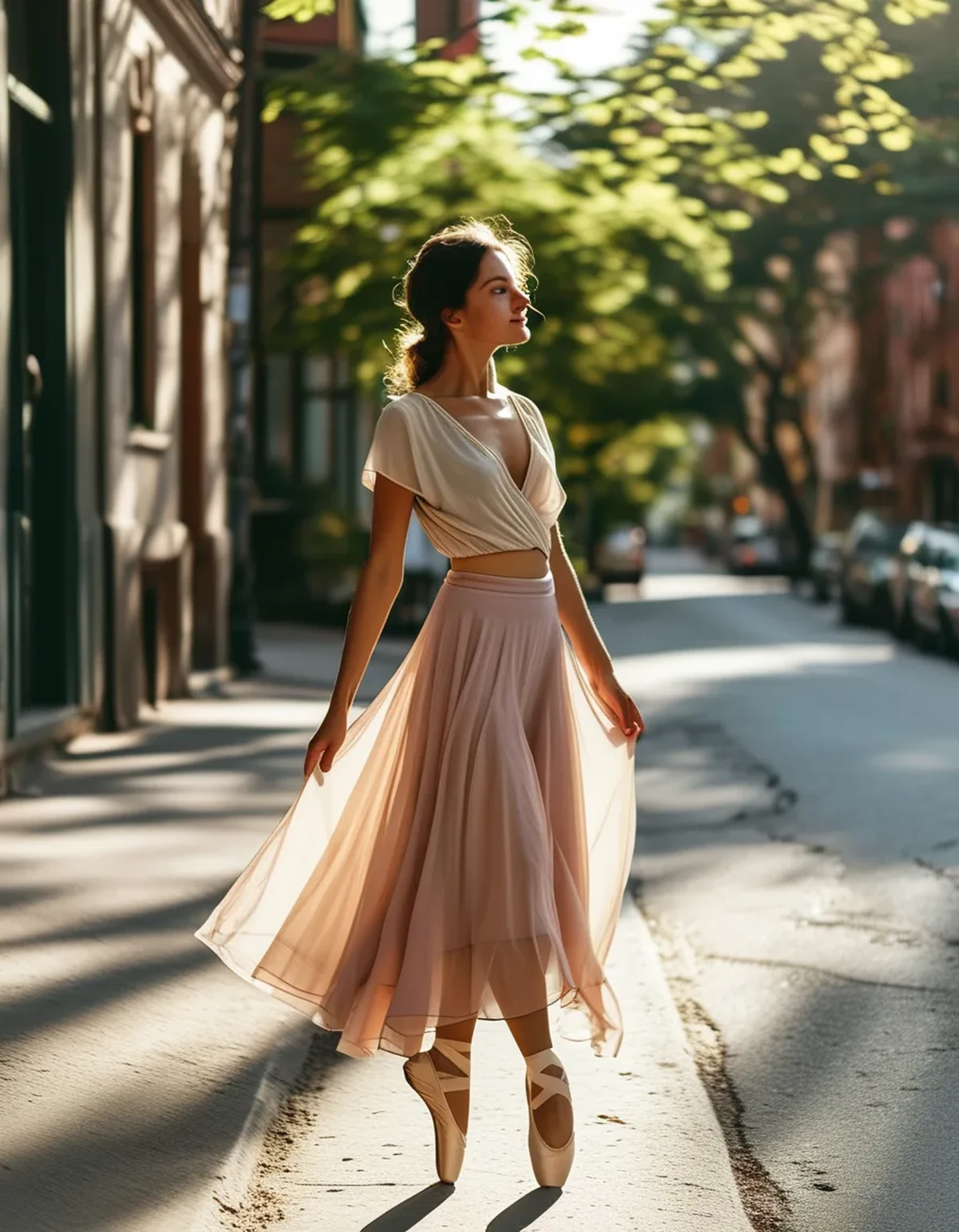
Chunky knit wrap → fine-gauge cotton or viscose wrap top. Same wrap front, same tie detail, a fraction of the warmth. Look for a fine rib rather than a heavy cable.
Leg warmers → nothing, or a cropped legging. There’s no hot-weather substitute for leg warmers and attempting one looks strained. Put them away and let the shoe carry the detail instead.
Tights → bare legs. This is the biggest visual change and the one people resist. It works because the flat shoe and the skirt shape are doing the aesthetic work, not the tights.
Layered cardigans → a single lightweight layer, often carried rather than worn. A fine cotton cardigan over an arm reads intentional; a knit worn in 29C reads uncomfortable.
Wool or heavy jersey skirt → a light woven or a satin-finish skirt. A bias-cut satin midi is one of the most useful pieces in the transitional balletcore wardrobe - it has the drape and the sheen without the weight.
Bodysuit → still works. A cotton or fine modal bodysuit is genuinely wearable in heat, gives the clean tucked line the aesthetic depends on, and is the single most transferable piece across seasons.
What Nobody Tells You About Balletcore in Hot Weather
Satin is hotter than it looks. The finish reads light and cool, but many satin fabrics are polyester, which traps heat. A viscose or cupro satin drapes the same and breathes far better - check the composition label rather than the appearance.
Ballet flats in heat are a real problem. Unlined leather flats with bare feet get uncomfortable fast, and the resulting friction is the reason people abandon them by mid-August. A thin invisible sock changes this completely and is worth the small aesthetic compromise.
Pale colours show perspiration more than dark ones. The balletcore palette is almost entirely pale, which is a genuine consideration in heat. Cream and dove grey handle it better than blush and pale pink.
The low-contrast palette gets washed out in bright summer light. An outfit that reads soft and layered indoors can look flat and shapeless in direct sun. Introducing one slightly deeper tone - a deeper grey, a soft brown - gives the outfit structure without breaking the palette.
Wrinkle behaviour matters more in summer, since you’re not covering anything with a jacket. Viscose and linen blends crease heavily; cotton jersey, modal, and cupro recover far better.
The aesthetic photographs better than it wears in heat. Most reference images are shot in autumn. Set expectations accordingly rather than concluding you’re doing it wrong.
What are three complete transitional outfits?
1. The everyday version Fine-rib cotton bodysuit in cream, bias-cut satin midi skirt in dove grey, ballet flats with invisible socks, small shoulder bag. A fine cotton cardigan carried for air-conditioned interiors. This is the outfit that works from a warm morning to a cold office to a warm evening.
2. The relaxed version Wrap top in fine viscose over a simple camisole, wide-leg cotton trousers in cream, flat sandals with a strap, hair tied back. Reads balletcore through the wrap detail and the palette rather than through any specific ballet reference. Most wearable option for a genuinely hot day.
3. The evening version Slip skirt or slip dress in a viscose satin, a fine knit shrug or cropped cardigan in the same tonal family, flats or a low block heel with a strap. The shrug is the transitional element - it does the layering work of a cardigan at a fraction of the warmth.
What all three have in common: one fitted element, one with volume or drape, a low-contrast palette, a flat or near-flat shoe with a strap, and exactly one layer available rather than three worn at once.
When to reintroduce the winter pieces: the leg warmers and chunky knits genuinely work from about the point where mornings sit below 15C. Trying to force them earlier is what makes the aesthetic look costume-y rather than considered.
FAQ: Transitional Balletcore Questions, Answered
Can I wear ballet flats without socks in summer?
You can, and most people find it uncomfortable and hard on the shoes. Thin invisible socks solve both problems and are effectively unseen.
Does balletcore work for an office in summer?
The bodysuit-and-midi-skirt combination is genuinely office-appropriate in most business-casual settings. Slip dresses and very sheer fabrics generally aren’t.
How do I keep it from looking like a costume?
One ballet reference per outfit is the working rule. Wrap top plus ribbon flats plus a tulle skirt plus a bun is four, and reads as a costume. Pick one.
Is the aesthetic tied to a body type?
No - it’s built on silhouette relationships (fitted plus volume, or defined waist) that adapt to any frame. Adjust which element is fitted and which has volume to what suits you.
TL;DR:
- Balletcore is silhouette, palette, and detail - not fabric weight, which is what makes a summer version possible
- Swap chunky knits for fine-gauge, tights for bare legs, layered cardigans for one carried layer
- Check satin composition - polyester satin traps heat, viscose or cupro doesn’t
- Invisible socks solve the ballet-flats-in-summer problem entirely
- One ballet reference per outfit is what separates considered from costume
Put the leg warmers away until mornings drop below 15C.
Keep Reading
This article is for general informational and styling purposes only. Fit, sizing, and product availability may vary.