Balletcore Finishing Touches: The Hair and Jewellery That Complete It
Quick Answer: Balletcore accessorising works on restraint and one texture: a low soft bun or a half-up style rather than a tight dancer’s bun, delicate gold or pearl jewellery in small quantities, and one ribbon or satin element - never more than one. The most common mistake is layering multiple ballet signifiers at once, which tips the look from referential into costume.
The clothing side of balletcore has been thoroughly covered. The finishing is where it either lands as an elegant everyday outfit or reads as fancy dress, and it comes down to a small number of specific choices.
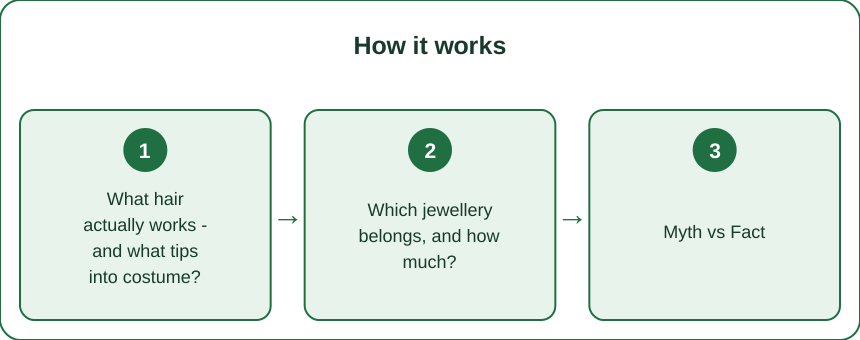
What hair actually works - and what tips into costume?
The distinction is between a soft interpretation and a literal one.
What works:
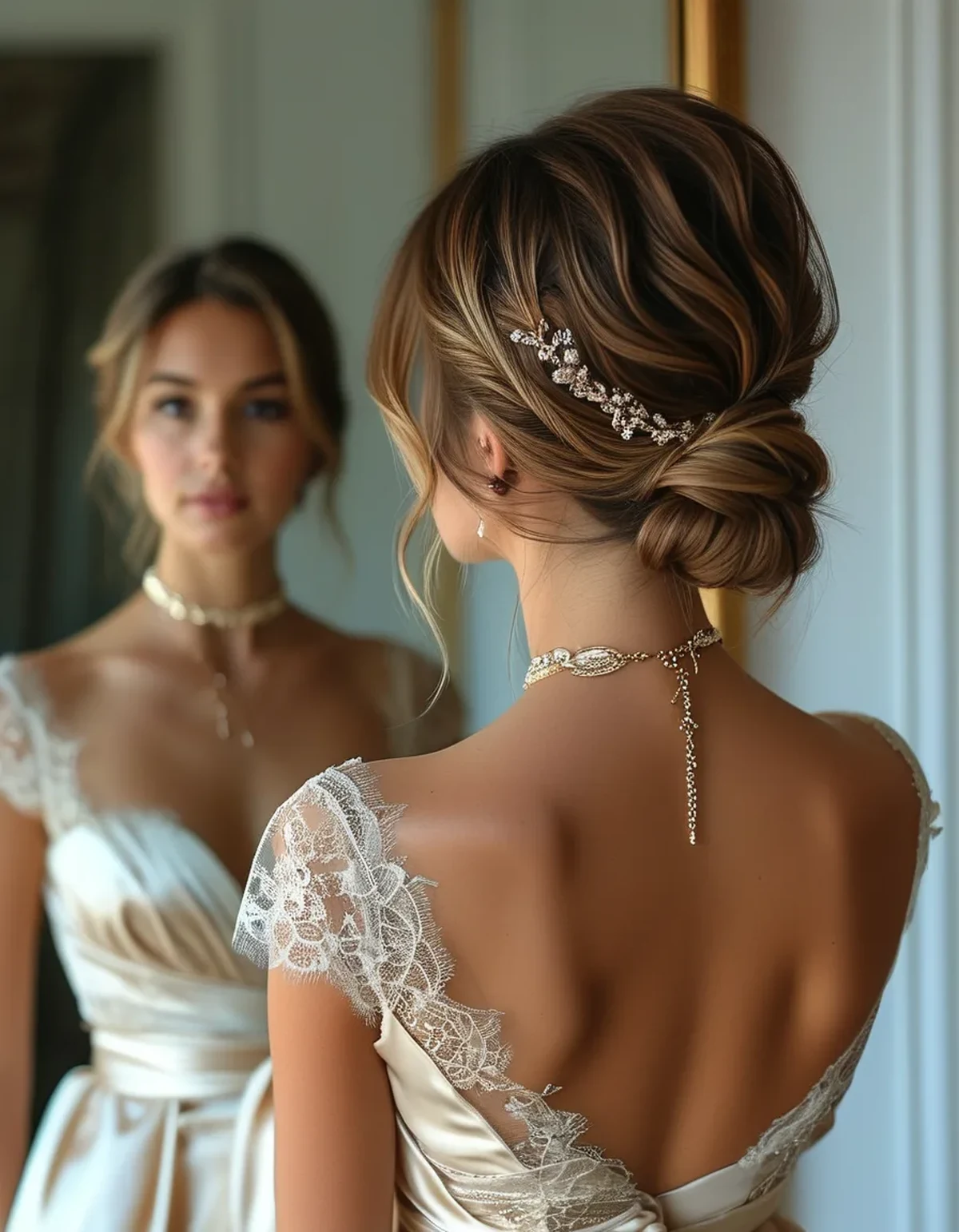
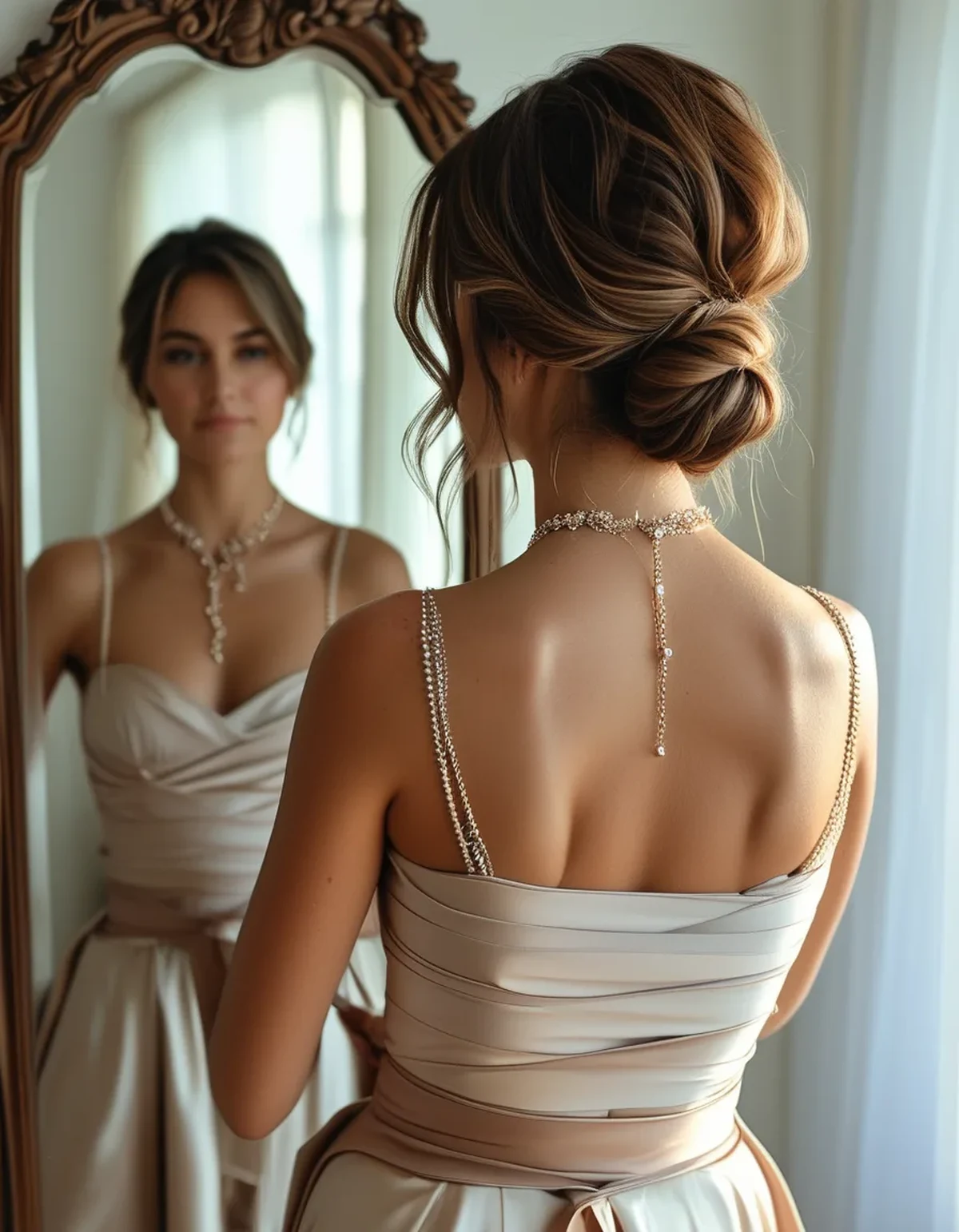
- A low, soft bun with a little volume and a few pieces left loose at the front. Soft is doing the work - a slightly imperfect bun reads as personal style, a slick one reads as uniform.
- A half-up style with the top section gathered low. The easiest and most modern option.
- A low ponytail with a ribbon, provided the ribbon is the only satin element in the outfit
- Loose hair with a single clip - the most understated version and completely wearable at work
What tips into costume:
- A high, slicked, netted bun - this is a performance bun, and worn with a wrap top it reads unmistakably as a dance costume
- A centre-parted, gelled-flat style with a bun; the flatness is what does it
- Multiple ribbons anywhere
The general principle: anything that looks like it was done for a stage will read as being for a stage. Softness and a little asymmetry are what make it a look rather than a costume.
A practical note for the season: as the weather cools, a low bun under a wide-collared coat is the exact silhouette this aesthetic is built around, which makes autumn the easiest time of year for it.
Which jewellery belongs, and how much?
Small, fine, and few. Balletcore’s jewellery register is closer to minimal classic than to anything ornate.
What works:
- A fine gold chain, single, worn short or at collarbone length
- Small pearl studs or a single pearl drop - pearls are the most on-register stone for this aesthetic
- A thin bangle or a delicate chain bracelet, one only
- A small signet or a plain band - nothing with a stone
- Ribbon as jewellery - a narrow velvet or satin ribbon tied at the neck, which is the single most effective balletcore accessory and should be the only ribbon in the outfit
What doesn’t:
- Chunky chains, statement earrings, layered stacks of anything
- Anything in an obviously contemporary or sporty register - a smartwatch, for instance, which sits awkwardly with everything else here
- Charm bracelets or anything with visible novelty
The counting rule that keeps it right: three pieces maximum, and one focal point. Earrings plus a fine chain plus a bracelet is complete. Adding a ribbon choker to that is one thing too many.
The one place to spend: a good fine chain that doesn’t kink. It’s the piece that will be visible in every version of this look.
Myth vs Fact: Balletcore Accessorising
Myth: You need ribbons for it to read as balletcore. Fact: A single ribbon is effective; ribbons in the hair, at the neck, and on the shoes at once is a costume. The clothing silhouette carries the reference on its own - accessories only need to confirm it once.
Myth: It has to be pink. Fact: The colour story is broader than the internet suggests - cream, oatmeal, dove grey, black, and burgundy all sit comfortably within it. Head-to-toe pale pink is the most costume-adjacent version.
Myth: Ballet flats are required. Fact: They’re the obvious shoe, and mary janes, loafers, and even a clean low boot all work. In autumn, a flat boot with a wrap knit is arguably the more wearable interpretation.
Myth: The aesthetic doesn’t work past a certain age. Fact: The soft-neutral, fine-jewellery, wrap-knit version of balletcore is essentially classic dressing with a soft edge, and it’s age-agnostic. The versions that don’t travel well are the literal ones - tulle skirts and leg warmers as outerwear.
Myth: You need to buy into it wholesale. Fact: One wrap cardigan and a low bun with existing clothes gets you most of the way. It’s one of the least purchase-intensive aesthetics going, which is arguably why it’s lasted.
How do you make it work for the office?
Balletcore’s soft-neutral core is genuinely office-compatible; the signifiers are what need dialling down.
Keep: the colour palette, the wrap or crossover neckline, fine jewellery, the low soft bun, and the general softness of fabric.
Swap out:
- Ribbon at the neck → a fine chain instead. A velvet ribbon choker is the single most costume-reading item in a professional setting.
- Leg warmers → opaque tights in the same tonal family
- Wrap top worn alone → wrap knit over a shell, or a wrap cardigan as a layer
- Ballet flats with a visible ribbon tie → plain flats, mary janes, or a low boot
What to add: one structured element. A tailored trouser, a structured bag, or a blazer over the top. The soft-plus-structured combination is what makes this read as considered rather than as loungewear, and it’s the single most useful adjustment for a workplace.
The proportion to aim for: roughly 70% soft, 30% structured. Fully soft head to toe is what reads as underdressed in an office, regardless of how good the individual pieces are.
FAQ: Balletcore Accessory Questions, Answered
Does balletcore work with short hair?
Yes - the aesthetic reads through softness and neckline rather than through hair length. A small clip, a narrow headband, or simply a soft finish works. The wrap neckline does most of the signalling.
Gold or silver?
Gold is the more common register, particularly warm and fine gold. Silver works if the rest of the palette is cool - grey, dove, black - but avoid mixing metals here, since the aesthetic depends on cohesion.
Are pearls too formal for daytime?
Small pearl studs are genuinely everyday and have been for decades. A full strand is the formal version; a single stud or a small drop is not.
What bag works?
Something soft and unfussy in a neutral - a small leather shoulder bag, a soft tote, or a top-handle in a muted tone. Avoid heavy hardware and obvious logos, both of which fight the whole register.
TL;DR:
- A soft low bun or half-up style; a slick high bun reads as performance costume
- Fine gold or pearl jewellery, three pieces maximum, one focal point
- One ribbon element only - hair, neck, or shoes, never more than one
- Swap the ribbon for a fine chain to make the look office-appropriate
- Add one structured piece; aim for roughly 70% soft to 30% structured
The clothes do the referencing. The accessories only need to confirm it once - and knowing when to stop is what separates a considered outfit from a costume.
Keep Reading
This article is for general informational and styling purposes only. Fit, sizing, and product availability may vary.