How Balletcore Survives the Temperature Drop
Quick Answer: Balletcore transitions by swapping its materials rather than its shapes. Keep the defining elements - the wrap front, the soft neckline, the ribbon and tie details, the narrow silhouette - and move them into wool, heavy knit, and opaque tights. The pieces to replace are the thin camisoles, the bare ankles, and the flimsy flats. Done correctly it becomes more wearable in fall than it was in summer, because the layering the aesthetic already loves finally has a reason to exist.
Balletcore in August is easy. Balletcore in a 50-degree drizzle is where people quietly give up and put on a hoodie.

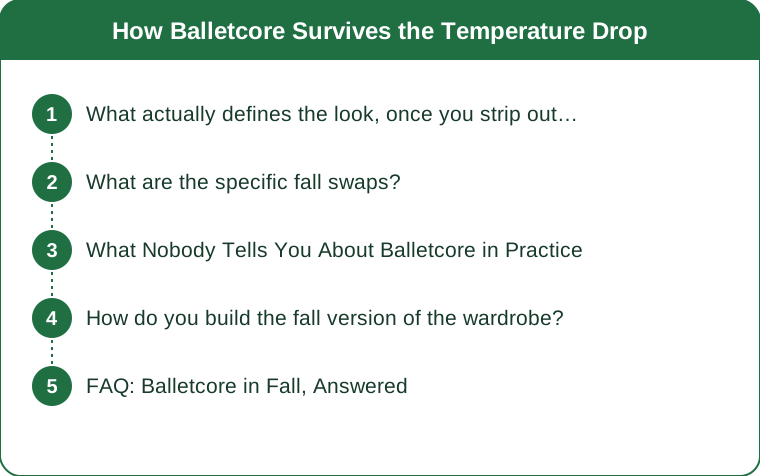
What actually defines the look, once you strip out the weather?
The wrap and the tie. A crossover front, a ribbon at the waist, a tie at the neckline - these are the structural signatures, and none of them are weather-dependent. A heavy wool wrap cardigan carries the same signal as a thin summer one.
The narrow, elongated silhouette. Balletcore reads long and lean because of proportion, not because of fabric weight. Straight-leg or slim trousers, a fitted top, a defined waist. All of that works in fall fabrics.
The soft neckline. Scoop, boat, and wrap necklines all read balletic. A crew neck does not. This is one of the highest-signal details and it costs nothing to preserve.
The muted palette. Cream, blush, black, grey, soft pink. This palette is arguably more at home in autumn than in summer, and it pairs particularly well with the deeper neutrals that come out in fall.
And the pointed or rounded flat shape. The shoe silhouette matters more than the shoe construction, which is exactly the opening you need - a pointed-toe boot or a sturdier Mary Jane preserves the line while surviving actual weather.
What is not essential: bare shoulders, visible ankles, and thin fabric. Those are summer implementations of the aesthetic, not the aesthetic itself, and confusing the two is why the look seems to end in September.
What are the specific fall swaps?
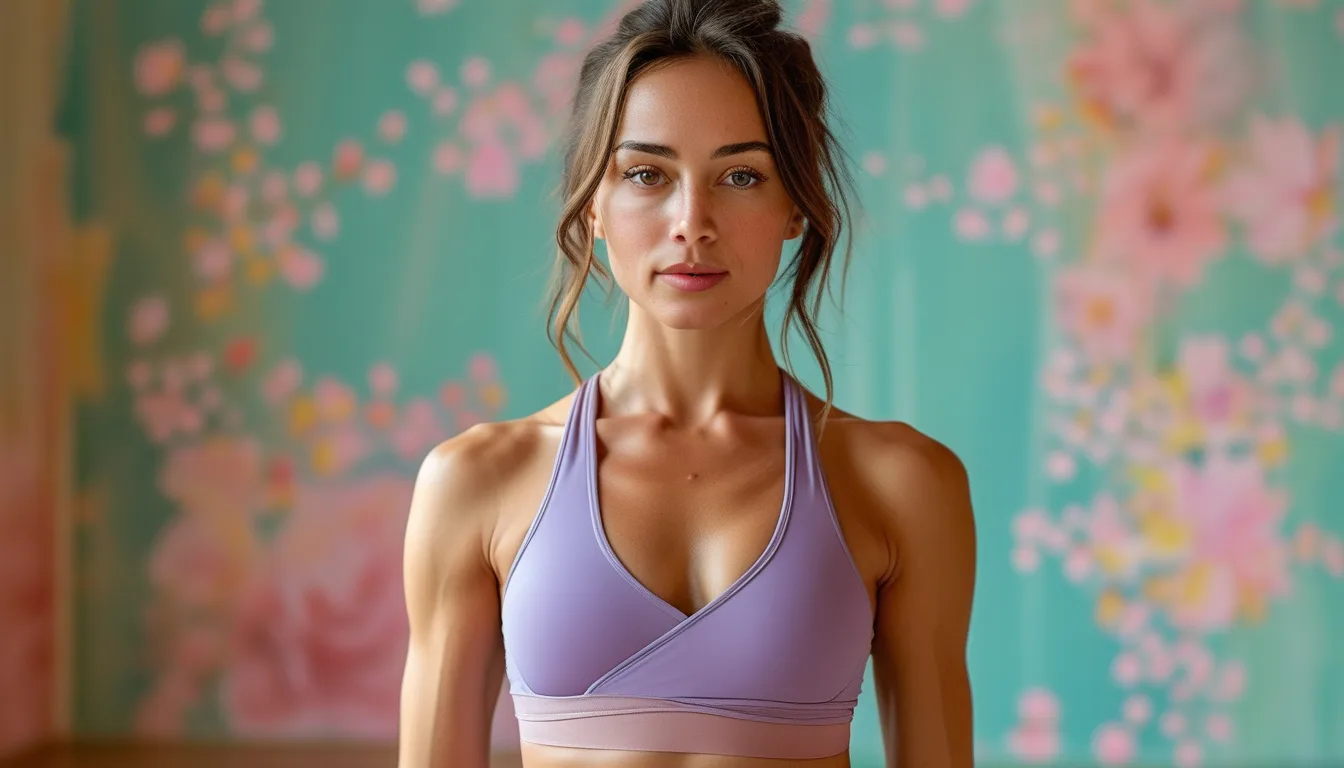
Thin camisole becomes a fitted merino long-sleeve. Same narrow silhouette, same soft neckline, actually warm. A fine-gauge wool in cream or black is the single most useful purchase for carrying this look forward.
Ballet flats become Mary Janes or pointed ankle boots. The rounded strap of a Mary Jane is a direct visual descendant of a ballet shoe, and it takes a real sole and a sock. Pointed ankle boots preserve the elongated line.
Bare legs become opaque tights. Black or cream opaque tights under a skirt or a dress read entirely correct for the aesthetic - dancers wear tights, after all - and solve the temperature problem completely.
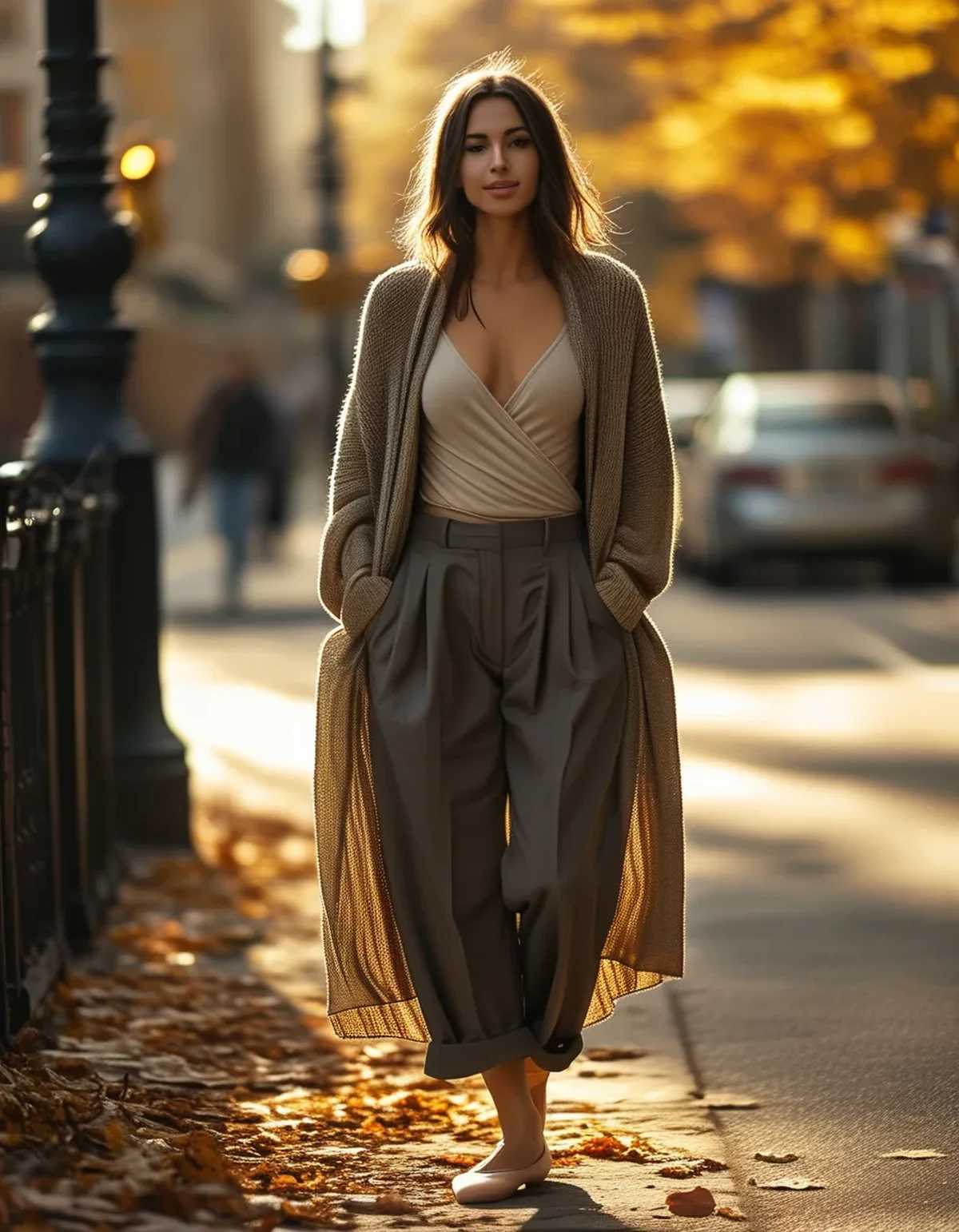
The thin wrap cardigan becomes a chunky one. Keep the crossover front and the tie waist, increase the gauge. A heavy wrap knit over a fitted base is arguably the most quintessentially balletcore fall outfit available.
Leg warmers become genuinely functional. This is the one item that is both a core reference and actually useful once it gets cold. Over slim trousers or tights with ankle boots, they work.
And a soft scarf replaces a bare neckline when it is genuinely cold, in a matching or adjacent neutral so it reads as part of the outfit rather than as an addition.
What Nobody Tells You About Balletcore in Practice
The line between reference and costume is fabric quality, not restraint. A cheap satin wrap top reads as dance-shop; a matte silk or a good wool in the identical shape reads as fashion. This is where the budget should go, and it matters far more than how many balletic details you include.
Do not wear more than two literal references at once. Leg warmers plus a wrap top plus a ribbon in the hair plus ballet flats is a costume. Pick two, and let the rest of the outfit be normal clothes in the right palette and proportion.
Actual ballet flats are terrible autumn shoes. Thin soles, no traction on wet leaves, and no room for socks. The aesthetic asks for the shape, not for the construction - a lug-sole Mary Jane keeps the look and survives a wet sidewalk.
The palette is the easiest way in. If you want the look without the styling commitment, just wear the colors. Cream, blush, and black in soft fabrics reads balletcore without a single explicit reference.
Fall is when the layering finally makes sense. The wrap-over-fitted-base structure that defines the aesthetic is genuinely a layering system, and in summer it is a hot, decorative one. In October it does an actual job.
And the ribbon detail scales down well. A slim ribbon tied at a ponytail, or a grosgrain tie at a wrap waist, is enough. A ribbon choker plus ribbon-laced shoes plus a bow belt is where it stops reading as personal style.
How do you build the fall version of the wardrobe?
Start with three base pieces. A fitted merino long-sleeve in cream or black, a pair of straight-leg trousers in a soft neutral, and opaque tights. These three carry almost everything else.
Add one heavy wrap cardigan. This is the hero piece for the season and the one most worth spending on. Look for a real crossover with a tie rather than a cardigan with a belt added.
Then one pair of shoes that solves the weather. Mary Janes with a substantial sole, or pointed ankle boots in black or cream. Either preserves the line and handles a wet October.
Add a skirt if you want the most recognizable version. A midi or calf-length skirt with opaque tights and ankle boots is the outfit most people picture, and it is genuinely practical in cool weather.
Keep the palette to three or four colors. Cream, black, grey, and one soft accent. The restraint is doing a lot of the work, and a tight palette also means everything combines.
And test the outfit for a full day of actual life. The aesthetic has a real weakness for pieces that look right and are unwearable - anything that requires you to keep retying it, or shoes that fail on a wet pavement, will end up unworn regardless of how good it looks in a mirror at nine in the morning.
FAQ: Balletcore in Fall, Answered
Can you wear balletcore in cold weather?
Yes - the defining elements are shapes and details rather than fabric weight. Keep the wrap front, soft neckline, tie details, and narrow silhouette, and move them into merino, heavy knit, and opaque tights.
What shoes work for balletcore in autumn?
Mary Janes with a substantial sole or pointed ankle boots. Both preserve the shoe silhouette that signals the aesthetic while handling wet pavement and allowing socks, which actual ballet flats do not.
How do you wear balletcore without looking like a costume?
Limit yourself to two literal references at a time and let everything else be ordinary clothes in the right palette and proportion. Fabric quality matters more than the number of details - a good wool in a balletic shape reads as fashion, while cheap satin reads as dance shop.
What colors define balletcore?
Cream, blush, soft pink, black, and grey. Sticking to three or four of these is the easiest way to get the look without any explicit styling, and the palette works particularly well with autumn neutrals.
TL;DR:
- Balletcore is defined by shapes and details - wrap fronts, soft necklines, ties, and a narrow silhouette - not by lightweight fabric.
- Swap materials rather than shapes: merino for camisoles, opaque tights for bare legs, Mary Janes or pointed boots for flats.
- A heavy wrap cardigan over a fitted base is the most quintessentially autumn version of the look.
- Limit yourself to two literal references at once; more than that reads as costume regardless of quality.
- The palette alone - cream, blush, black, grey - delivers most of the effect with none of the styling risk.
The aesthetic was always a layering system. It just spent the summer pretending not to be, and October is when it finally gets to do its job.
Keep Reading
This article is for general informational and styling purposes only. Fit, sizing, and product availability may vary.