The Delicate Fabric Problem Nobody Mentions About Balletcore Style
Balletcore’s signature look leans heavily on tulle, mesh, satin and wrap fabrics that photograph beautifully and behave terribly in a normal laundry routine — this is the part of the trend nobody mentions until a favorite wrap top comes out of the wash misshapen or snagged. Here is why these fabrics are unusually high-maintenance, the specific mistakes that ruin them fastest, and how to keep the aesthetic without constantly replacing pieces.

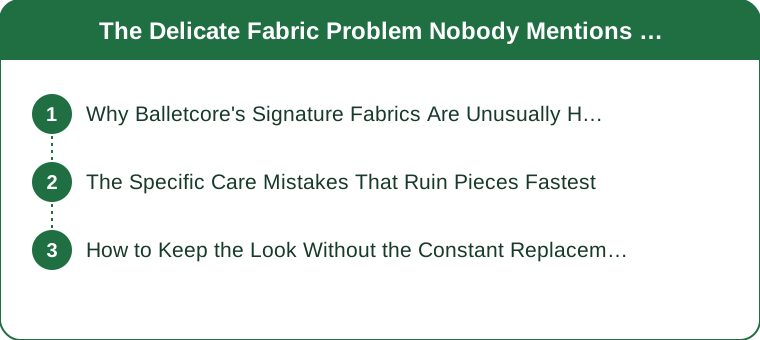
Why Balletcore’s Signature Fabrics Are Unusually High-Maintenance
The material reality: the tulle-and-mesh-snag-easily (the loose, open weave structure of tulle and mesh, core to the balletcore-bodysuit-tights-guide aesthetic, catching on jewelry, zippers and rough surfaces far more easily than a tighter knit — the open-weave-is-fragile-by-design), the the-satin-shows-every-water-mark (the satin’s sheen finish making water spots, pulls and creasing far more visible than a matte fabric would show the exact same damage — the shine-makes-flaws-visible-not-just-present), the the-wrap-styles-rely-on-precise-tension (the wrap tops and skirts depending on fabric holding its exact original shape and stretch to tie and drape correctly, which washing and wear gradually degrade — the shape-degradation-changes-how-the-piece-even-fits), the the-delicate-trims-and-ribbon-details (the ribbon ties and delicate trim details common to the aesthetic being the first things to fray or lose shape in a standard wash cycle — the small-details-fail-first), the the-fabrics-werent-designed-for-frequent-wear (the many balletcore-adjacent fabrics historically intended for occasional performance wear rather than the frequent everyday wear the trend now applies them to — the borrowed-from-a-context-that-assumed-less-wear), and the reframe (the high-maintenance nature as inherent to the fabrics the aesthetic is built on, not a sign of buying low-quality pieces).

The Specific Care Mistakes That Ruin Pieces Fastest
What to stop doing: the machine-washing-tulle-and-mesh (the agitation and other garments in a regular wash cycle snagging and stretching delicate open-weave fabric almost immediately — the the-single-most-common-mistake), the the-high-heat-drying-satin (the dryer heat warping satin’s structure and dulling its characteristic sheen permanently — the heat-is-satins-enemy), the the-ignoring-care-labels-on-wrap-pieces (the wrap-style pieces specifically needing shape-preserving care since their fit depends on retained fabric memory, more than a simple structured piece would — the wrap-pieces-need-more-care-attention-not-less), the the-hanging-heavy-wet-tulle (the wet tulle stretching out of shape under its own weight when hung rather than laid flat to dry — the gravity-plus-wet-weight-distorts-tulle), the the-storing-crushed-in-a-drawer (the tulle and structured mesh pieces losing their shape when compressed in a drawer versus hung or stored with the shape supported — the storage-method-affects-longevity-too), and the frame (the biggest mistakes as machine washing delicate open weaves, high-heat drying satin, ignoring wrap-piece care needs, hang-drying wet tulle, and crushing structured pieces in storage — each one shortens a piece’s life dramatically and each one is avoidable).
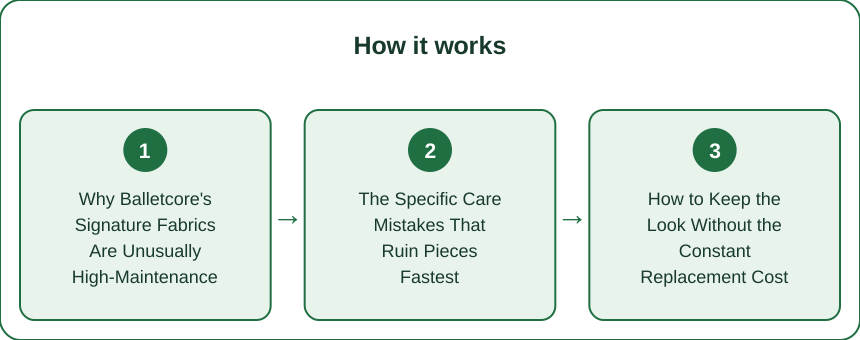
How to Keep the Look Without the Constant Replacement Cost
The practical approach: the hand-wash-or-mesh-bag-delicate-cycle (the hand washing or using a mesh laundry bag on the gentlest machine cycle for tulle, mesh and satin pieces specifically — the protect-delicate-fabric-from-agitation), the the-air-dry-flat-not-hung-for-tulle (the laying tulle and mesh pieces flat to dry, preserving shape in a way hanging can’t — the flat-drying-prevents-stretch-distortion), the the-buy-fewer-higher-quality-pieces (the investing in fewer, better-made balletcore pieces that tolerate more handling rather than a larger quantity of delicate fast-fashion versions, from the balletcore-without-looking-costume-guide logic — the quality-reduces-total-maintenance-burden), the the-reserve-the-most-delicate-pieces-for-lower-wear-occasions (the saving the most fragile tulle or satin pieces for occasions rather than daily rotation, and choosing sturdier balletcore-adjacent pieces — a ballet flat, a wrap cardigan in a study knit — for everyday wear — the match-fragility-to-frequency-of-wear), the the-spot-clean-when-possible-instead-of-full-washing (the spot-cleaning a small mark rather than a full wash cycle whenever feasible, since fewer wash cycles directly extends delicate fabric life — the fewer-total-washes-is-the-real-lever), and the frame (the sustainable approach as hand washing or mesh-bagging delicates, air-drying flat, buying fewer better pieces, saving the most fragile items for occasional wear, and spot-cleaning when possible — the aesthetic survives the maintenance reality once the care matches the fabric).
Balletcore’s signature tulle, mesh, satin and wrap fabrics are inherently high-maintenance — open weaves snag easily, satin shows every water mark and heat-warp, and wrap pieces depend on precisely retained fabric shape and tension to even fit correctly, all in fabrics historically meant for occasional performance wear rather than everyday rotation. The fastest ways to ruin them are machine washing delicate open weaves, high-heat drying satin, ignoring wrap-piece care instructions, hang-drying wet tulle under its own weight, and crushing structured pieces in a drawer. The fix is hand washing or mesh-bagging delicates on the gentlest cycle, air-drying tulle flat rather than hung, investing in fewer higher-quality pieces that tolerate more handling, reserving the most fragile items for occasional wear while choosing sturdier pieces for daily rotation, and spot-cleaning instead of full washing whenever possible. The look survives the upkeep once the care actually matches what the fabric needs.
Keep Reading
This article is for general informational and styling purposes only. Fit, sizing, and product availability may vary.