Balletcore Meets Chunky Knitwear: The Early-Autumn Pairing That Actually Works
Quick Answer: Balletcore reads light and elongated, and chunky knitwear reads heavy and wide - so pair them by keeping the volume on exactly one half of the body and the other half fitted. An oversized knit over a fitted bodysuit and slim trousers works. An oversized knit over a full skirt does not. The second rule: keep the neckline open, because that’s where balletcore’s lightness actually lives.
The first genuinely cool morning arrives and balletcore stops working - not because the aesthetic is seasonal, but because the obvious warm layers flatten everything the look depends on.
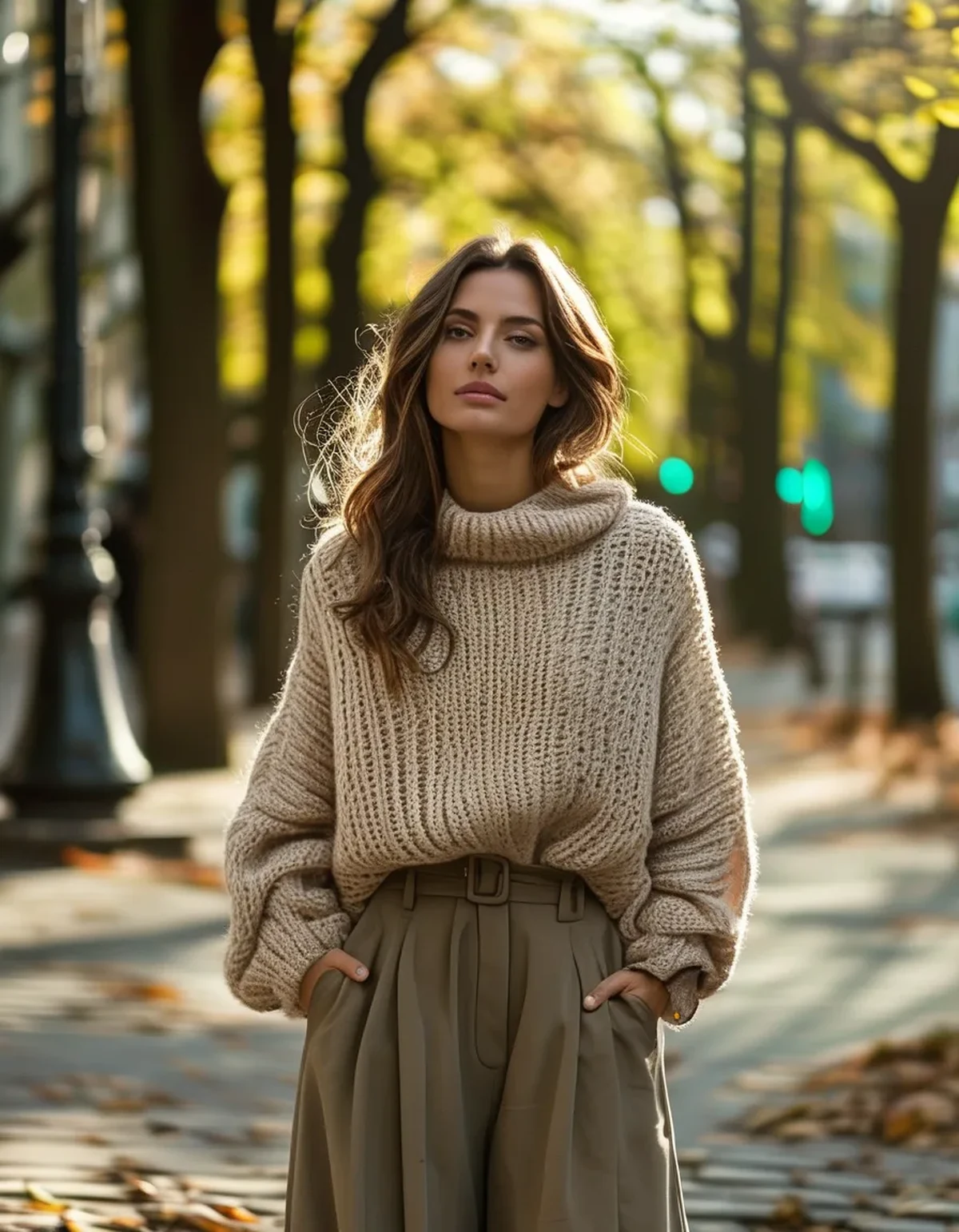
Why does chunky knit usually kill a balletcore outfit?
Because the two aesthetics are built on opposite proportions and one of them wins by default.
Balletcore’s whole language is line. Fitted through the body, elongated leg, visible neck and collarbone, soft narrow silhouettes. It borrows from dancewear, which exists to make the body’s line readable across a theatre.
Chunky knit does the opposite on purpose. Volume, texture, dropped shoulders, a horizontal line across the widest part of you. It’s a beautiful thing wearing itself, and it will happily eat a delicate outfit underneath.
Put them together carelessly and you get the specific failure everyone recognises: the outfit reads as a big jumper with something underneath, and the balletcore contribution disappears entirely.
The fix isn’t avoiding knitwear. It’s controlling where the volume sits:
- One volume zone, not two. Big top, slim bottom - or slim top, full skirt. Never both.
- Keep the neck open. A wide or scooped neck preserves the collarbone line that does most of balletcore’s work.
- Keep one delicate detail visible. A ribbon tie, a wrap edge, a ballet flat, a fine strap at the shoulder - one is enough.
Look 1: The oversized knit over a bodysuit
This is the workhorse pairing and the one to build first.
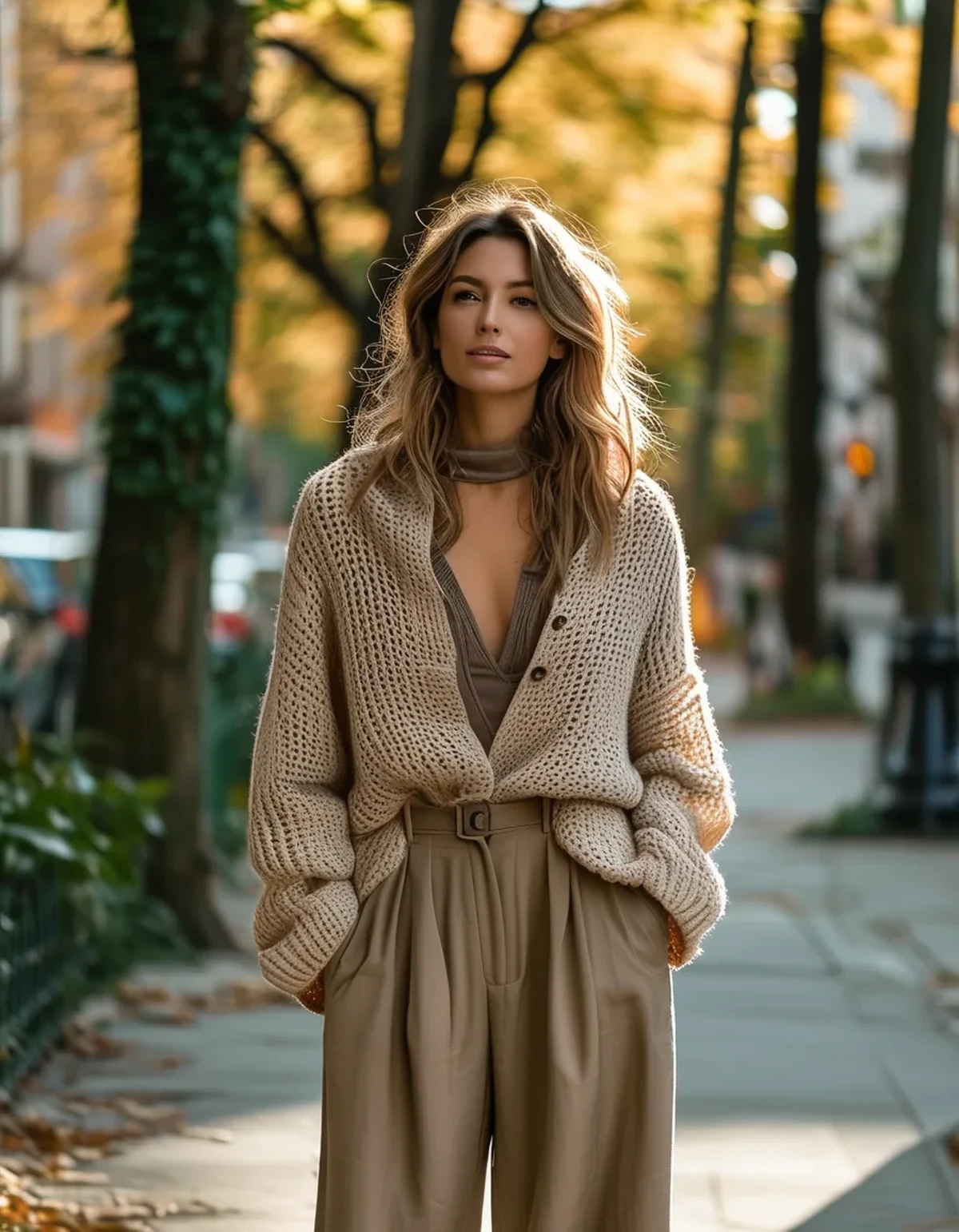
The formula: a fitted bodysuit or long-sleeve knit top, high-waisted slim or straight trousers, and an oversized knit worn open or pushed off one shoulder. The bodysuit keeps the torso line clean so the knit reads as a deliberate layer rather than as the outfit.
Why it works: the fitted base means the silhouette underneath is still readable even when the knit is on. When you push the sleeves up or slide it off a shoulder, you get the neck and wrist exposure that keeps it from feeling bulky.
The details that make it: a knit in cream, oatmeal, dove grey, or soft black rather than a loud colour - balletcore lives in a narrow, quiet palette. A slightly cropped knit length, sitting at or just above the high waistband, so the leg line stays long.
What to avoid: a mid-thigh knit over slim trousers, which cuts you at the least flattering point and hides the waist that the whole silhouette is organised around.
Look 2: The cardigan-and-wrap-top layer
The lighter option for days that are cool rather than cold, and the more obviously balletcore of the two.
The formula: a ballet wrap top or a fine-knit bodysuit, a fine-gauge cardigan worn open, and either wide-leg trousers or a midi skirt with tights. The cardigan does the temperature work while the wrap top does the aesthetic work.
Why it works: an open cardigan creates two vertical lines down the front of the body, which is exactly the elongating effect balletcore wants. The wrap top’s crossover neckline stays visible in the gap, so the reference reads clearly.
Fabric matters here more than usual: fine merino, cashmere blends, or a soft cotton knit drape and fall open. A stiff chunky cardigan holds its shape away from the body and creates width at the hip.
The upgrade: a cardigan slightly longer than the top underneath, so you get a soft layered hem rather than a single hard line.
Look 3: The knit over a slip skirt
The one people get wrong most often, and the most striking when it lands.
The formula: a bias-cut satin or silk slip skirt, a fitted knit or bodysuit tucked in, and the chunky knit on top - but tucked at the front only, or cropped. Ballet flats or a low boot.
Why the tuck is non-negotiable: an untucked chunky knit over a fluid skirt gives you volume on top and volume below with no waist anywhere. A front tuck reintroduces the waistline and lets the skirt fall from a defined point, which is the entire reason the slip skirt is there.
The texture contrast is the point. Matte, heavy, hand-made-looking knit against liquid, cool, light satin - the two extremes make each other look more like themselves. This is a more interesting outfit than either piece suggests on its own.
Colour approach: keep the skirt in the same tonal family as the knit - cream on champagne, grey on pewter, black on black. Tonal dressing lets the texture do the talking, which is a very balletcore instinct.
Look 4: Leg warmers with knitwear, without the costume problem
Leg warmers are balletcore’s most literal reference and its biggest risk, and autumn is precisely when they become genuinely useful rather than decorative.
The formula: slim trousers or leggings, ankle-length, with leg warmers scrunched over the ankle and into a low boot or a ballet flat. A fitted top, and the chunky knit over it.
The rule that keeps it out of costume territory: only one dancewear reference at a time. Leg warmers plus a wrap top plus a bun plus ribbon ties is a costume. Leg warmers with an otherwise ordinary outfit is a styling choice.
Keep them low and scrunched, sitting at the ankle rather than pulled up the calf. Pulled high they read as 1980s aerobics; low and slouched they read as contemporary.
Colour: match them to your shoe or your trouser, not to your top. Matching down keeps the leg line continuous; a contrasting leg warmer chops the leg at the ankle and shortens it.
And a practical note: ribbed wool or wool-blend actually keeps ankles warm on a transitional morning, which is more than most seasonal styling tricks can claim.
Look 5: The full outfit for a genuinely cold day
When you need a coat, the calculation changes - the coat becomes the outer silhouette and everything else is what shows in the gap.
The formula: a long, straight, unstructured coat in wool or a wool blend, open. Underneath, the fitted-base-plus-fine-knit combination rather than the chunky one, because a chunky knit under a coat destroys the coat’s line and overheats you indoors.
Why the coat length matters: a long straight coat worn open creates the same two vertical lines as the open cardigan, at a larger scale. A short, boxy, structured coat does the opposite and squares you off at the hip.
Save the chunky knit for indoors. Carry it or wear it as the mid-layer only on days cold enough that you’ll keep the coat on, and treat the fine knit as your default under outerwear.
The shoes carry the reference at this point. With a coat on, most of the outfit is invisible, so a ballet flat, a low mesh-panel boot, or a simple loafer with a fine sock is doing the identifying work.
And keep the bag small and soft. A structured, hardware-heavy bag is the single most common thing that pulls this look toward generic autumn office dressing - a soft shoulder bag or a small top-handle in the same tonal family keeps it coherent.
FAQ: Balletcore Autumn Styling, Answered
Can I wear balletcore with boots instead of flats?
Yes - keep them low, slim, and in a colour close to your trousers or tights. A chunky lug-sole boot fights the silhouette; a sleek ankle boot supports it.
What colours work once summer’s over?
The palette shifts warmer rather than darker: cream, oatmeal, camel, dove grey, dusty rose, and soft black. Avoid jewel tones, which pull the look toward a different aesthetic entirely.
Is balletcore still relevant in autumn or is it a spring look?
It reads as spring because of the fabrics people choose, not the shapes. The same silhouettes in wool, knit, and heavier satin work through the cold months without adjustment.
How do I wear this to an office?
Trade the bodysuit for a fine knit, the leg warmers for opaque tights, and add a tailored trouser. The proportions stay identical - only the fabric formality changes.
TL;DR:
- Volume on one half of the body only - never oversized knit plus full skirt
- Keep the neckline open; the collarbone line is where balletcore’s lightness lives
- Tuck a chunky knit at the front over anything fluid, or the waist disappears
- One dancewear reference at a time keeps leg warmers from reading as costume
- Under a coat, switch to a fine knit and let the shoes carry the aesthetic
Balletcore doesn’t stop working in autumn. It just stops working under the wrong layer.
Keep Reading
This article is for general informational and styling purposes only. Fit, sizing, and product availability may vary.